
Utah Released-Inmate Records
“Released” describes the end of one custody event, not always the end of a criminal case or sentence. A person may leave a Utah county jail on bond, recognizance, time served, dismissal, or a court order. Another person may transfer from the jail to UDC, the U.S. Marshals Service, federal prison, immigration custody, a hospital, or another county. That first roster will no longer show either person in custody, but only one may have entered the community.
State prisoners follow a different record chain. Utah commonly uses indeterminate prison terms, which are statutory ranges rather than one fixed prison date. The Utah Board of Pardons and Parole controls parole decisions within its authority. Parole ends imprisonment and begins conditional supervision; expiration or termination is the later event that ends the sentence or supervision. The source and event label must therefore travel with every date.
The official Utah Department of Corrections page identifies the statewide agency responsible for state custody and community supervision.
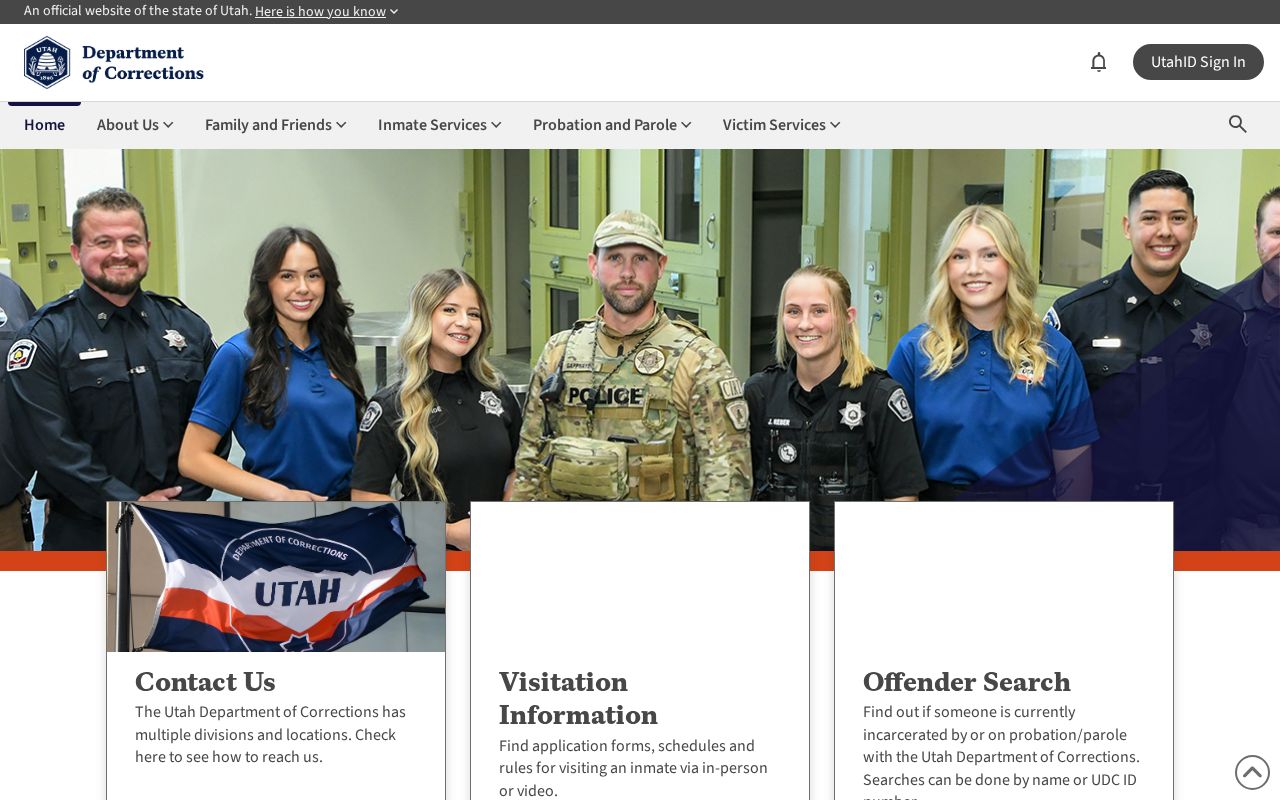
The agency screen helps separate a state-prison release from an ordinary county-jail event.
Important: Disappearance from a current roster shows only that the person is no longer listed there. Confirm release, transfer, or another disposition with a movement record.
Utah Release Types Explained
The next record depends on how custody changed. County records usually document a jail event, while UDC and Board records document state-sentence transitions. Court orders supply legal authority but may not prove the minute physical processing finished. Each term below should be read in that limited role.
| Event | What changed | Best next record |
|---|---|---|
| Bond or recognizance | The person leaves local pretrial custody under court conditions. | County release record and court docket. |
| Time served or dismissal | The local custody basis ends, subject to other holds. | Sheriff movement record and signed court order. |
| Transfer to UDC | County custody ends but state confinement begins. | County transfer event and UDC location. |
| Parole | Prison confinement ends while UDC supervision continues. | Latest Board order and UDC profile. |
| Termination or expiration | The governing sentence or supervision reaches its official end. | Board, court, or UDC legal-status record. |
| Federal or ICE transfer | One local custody event ends as another jurisdiction receives the person. | BOP, federal court, or ICE record. |
A detainer is a request or legal basis for another agency to take custody. It can stop community release even after the first case authorizes release. A discharge is also narrower than common speech suggests: it should be tied to the order or agency status that actually ends a sentence or supervision.
Utah Release Record Fields
Utah has no single public file with every county and state release. The field inventory changes by custodian. A county sheriff may use booking number, release date, movement type, charge, or destination. UDC's public result uses Offender #, Name, Location, Housing Facility, Release Date/Type, Case Manager, and Case Manager Email. The Board adds decision dates, effective dates, outcomes, details, and linked orders.
| Field | What it can establish |
|---|---|
| Person identifier | A booking or UDC number that distinguishes people with similar names. |
| Release or movement date | When the keeping agency recorded a custody change, subject to processing time. |
| Release type or reason | Bond, court release, transfer, parole, expiration, or another coded event. |
| Releasing or receiving facility | Which office completed the event and whether another custodian took over. |
| Supervision status | Whether probation or parole continues outside secure confinement. |
| Order and case details | The court or Board authority, effective date, and later contingencies. |
No single field should be isolated. A release date beside a receiving facility may describe transfer. A parole date beside a case manager reflects community supervision, not full discharge. A court dismissal can end one case while an unrelated hold remains. Match name, identifiers, dates, locations, and orders before drawing a conclusion.
Request Utah Release Records
Utah's Government Records Access and Management Act, or GRAMA, governs access to state and local government records. It recognizes public, private, controlled, protected, and limited records. That framework permits access to public portions while allowing redaction of health, victim, security, and other classified material. A release date can be public without making the entire jail or corrections file public.
- Identify the custodian: the booking sheriff, UDC, the Board, a court, BOP, or ICE.
- Check the custodian's public search before requesting a duplicate record.
- Give the full name, known number, useful date range, facility, and exact event sought.
- Ask for releasable and segregable portions if part of the record is classified.
- Review the written response, fee estimate, denial basis, and appeal instructions.
Under Utah Code §63G-2-204, an ordinary request is due as soon as reasonably possible and no later than ten business days. The five-business-day track requires a showing that quick access primarily benefits the public. Extraordinary circumstances can extend the time with the statutory explanation and estimated response date.
Reasonable actual-cost fees are governed by §63G-2-203. The lowest-paid qualified employee's rate caps staff time, the first quarter-hour generally cannot be charged, and simple inspection carries no fee. An estimate over $50 can require prepayment. Waiver grounds include primary public benefit and, in some cases, a request by the subject of the record.
Retention and public access are separate questions. A custodian may still hold a movement record after it disappears from an online roster, while a sealed, expunged, private, controlled, or protected item may be withheld from public access. Utah's Expungement Act and the court's expungement process can restrict the public court path when a qualifying order has been entered. Absence from a web search alone does not establish that an order exists.
A written denial should identify the record or portion withheld, cite the legal basis, and provide the appeal route and deadline. That makes a narrow request useful even when the complete file cannot be released. Ask for the booking and release event, legal-status history, parole or expiration date, or other exact public field. Do not combine unrelated health, victim, security, and presentence material into the same broad demand.
The official GRAMA title shows the statewide classification and request framework.
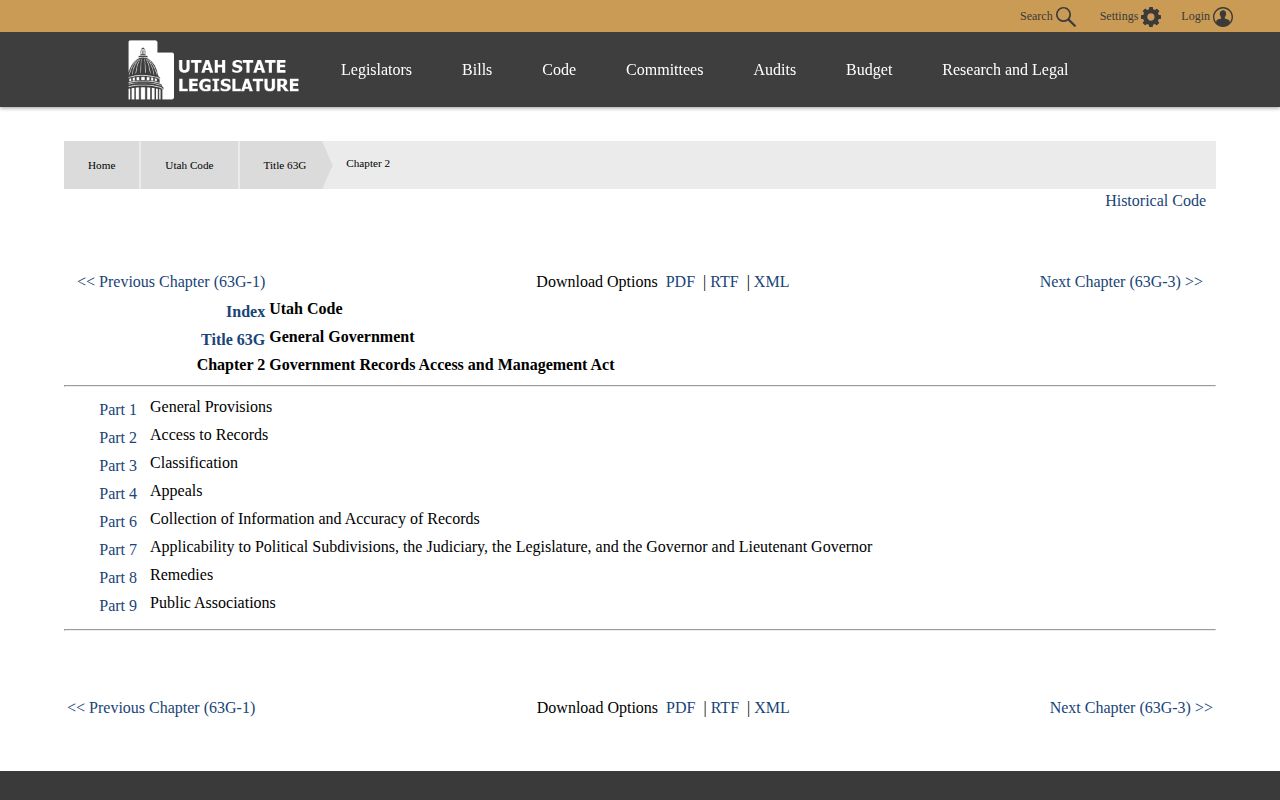
The statute screen supports a narrow request for a release event rather than a demand for every item in a corrections file.
Utah Prison Release-Day Routing
UDC's July 2024 Release Day FAQ describes a distinctive statewide process. Releases and paroles are processed every Tuesday, with most completed at the Utah State Correctional Facility visiting building in Salt Lake City. Almost everyone serving a UDC sentence in a county contract jail is brought to USCF. Direct release from the county contract jail is described as extremely rare, with affected family notified.
Corrections transports a person who is paroling to a community correctional center. Family need not arrange that move. If no ride is available, a release-team member or volunteer can take the person to a nearby UTA TRAX station, and the no-ride group leaves last. The official pickup flyer asks for one shirt and one pair of pants. No official statewide cash gate-money amount was verified.
The UDC correctional-facilities inventory shows the state prisons, county placement system, and community centers involved.
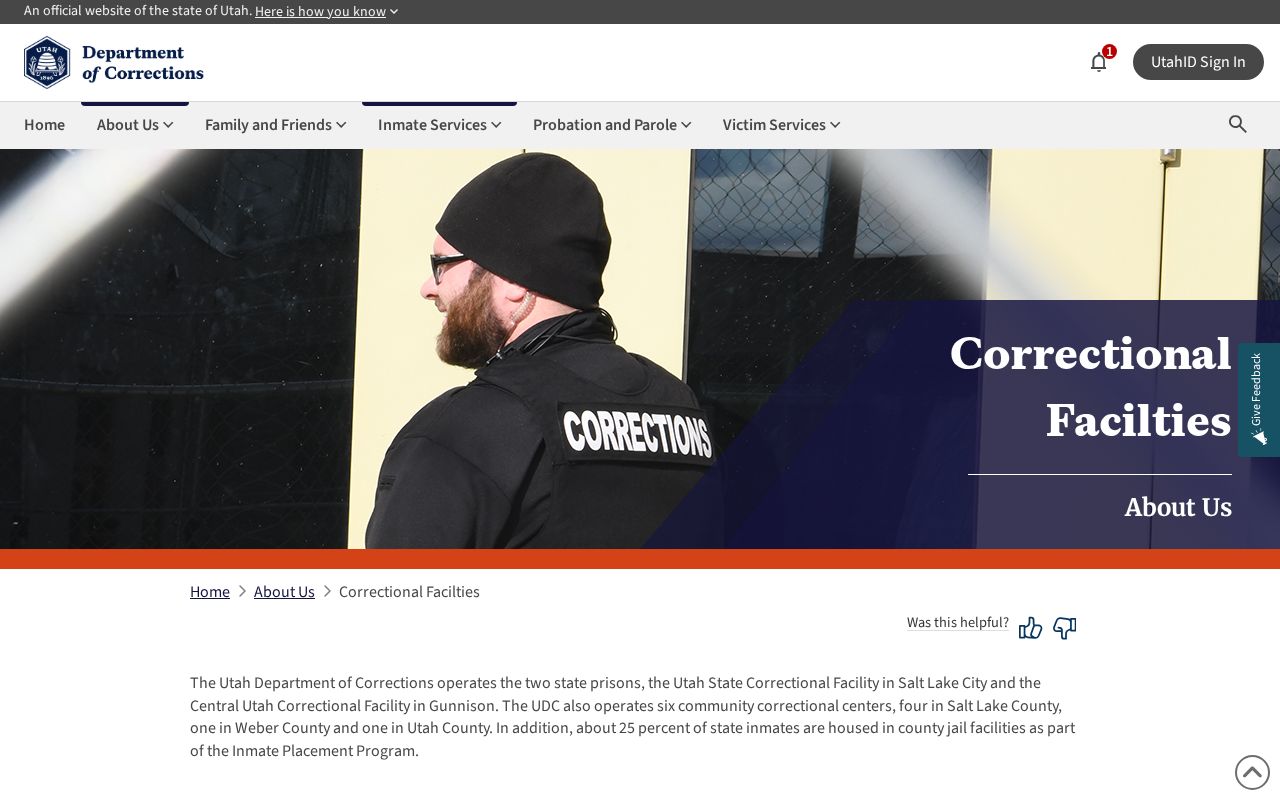
The statewide list explains why the facility holding a person before Tuesday may differ from the release-processing site.
Utah Release Statistics Defined
Statewide figures need both a date and a unit. UDC reported that its Records Office processed 3,217 admissions and 3,073 releases from custody in FY2021. Those are agency transactions, not necessarily unique people. The same report lists 1,168 GRAMA requests or subpoenas, 51 GRAMA appeals, and 324 expungements during that fiscal year.
The FY2023 to FY2024 annual report uses average daily population across all days in the year for its prison, probation, and parole charts. That method reduces the effect of one-day swings, but it is not an annual release count. Keeping parole separate from prison also shows why physical release and final discharge are different populations.
The Commission on Criminal and Juvenile Justice series fell from 4,621 releases in FY2011 to 3,005 in FY2020. It also reported that the share released to parole fell from 79.1 percent across FY2011 to FY2015 to 61.4 percent across FY2016 to FY2020. These are historical trends, not a live 2026 count or a way to predict one person's release.
Find Utah Released Inmates
Begin with the sentence and jurisdiction, not with the broadest name database. State prisoners, county detainees, federal prisoners, and immigration detainees appear in different systems. Use the sequence below until two compatible sources explain the event.
- For a state sentence, search UDC by offender number or first and last name.
- For a local booking, identify the physical housing county and obtain its release or movement record.
- Read the matching court case for bond, dismissal, sentence, probation, commitment, or termination orders.
- Check the Utah Board for parole, redetermination, rescission, violation, termination, or expiration orders.
- Use VINELink for participating custody events, BOP for federal prison, and ICE when immigration custody is supported.
The UDC offender search screen shows the current-supervision limit and the accepted search fields.
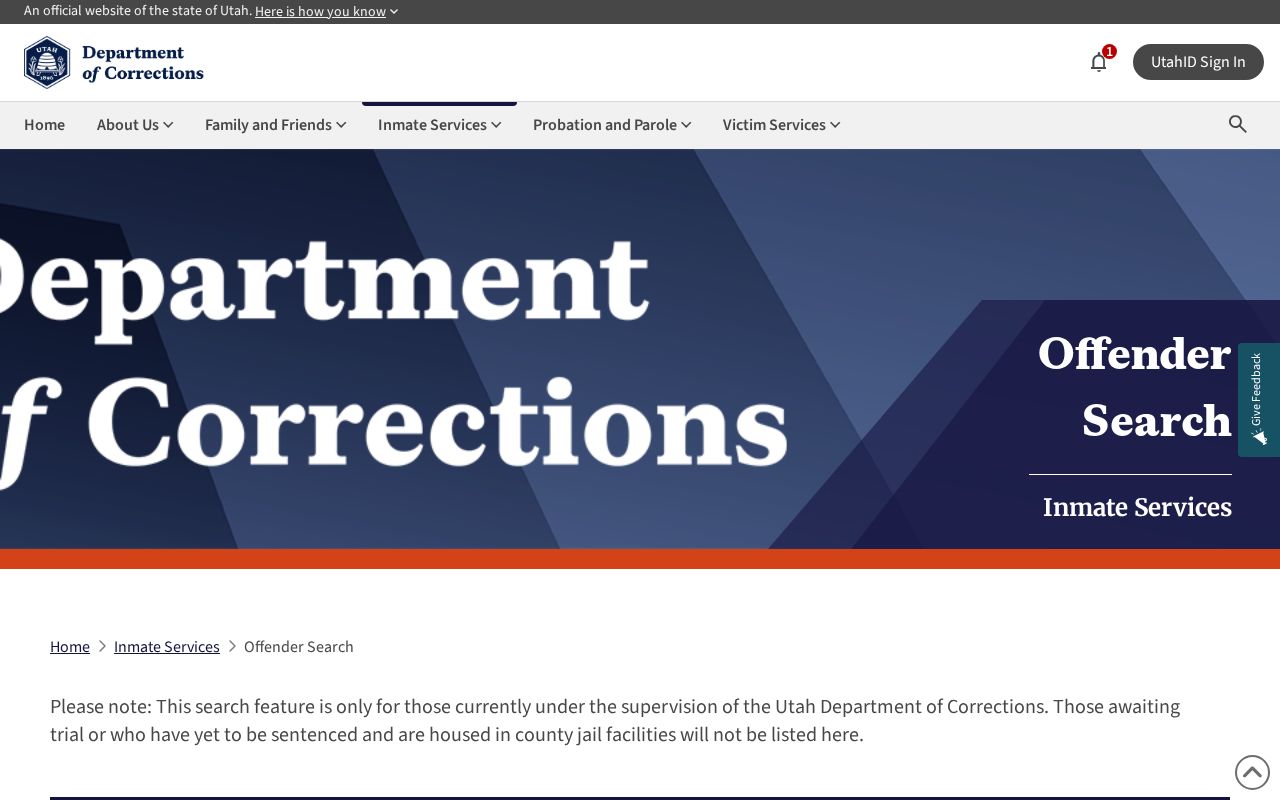
Its expanded record should be read with the newest Board order, especially when Release Date/Type contains a future date.
For the exact scope, fields, and historical fallback, use the UDC offender search record guide. A fully discharged person may no longer appear because UDC limits the tool to people currently incarcerated or supervised.
Utah County Release Differences
Utah's counties do not publish one uniform product. Some provide historical booking searches or daily in-and-out dockets. Others show only a live roster, which loses the person from view after release or transfer. Piute and Wayne have no operating county jail and route people to another county. Morgan reports no jail beds and relies on Weber or Davis facilities.
The county of arrest, county of physical housing, and receiving state or federal agency may therefore be three separate custodians. Start with the arrest record, but follow each transfer. When Sevier physically housed a Piute or Wayne prisoner, Sevier controls the physical booking and release event while the home sheriff may retain arrest and transport records.
The Utah County Directory lists every locality site and county seat. It is a routing tool, not a claim that every county operates a jail or posts the same fields.
Utah Parole Release Records
The Utah Board search accepts offender name or number, hearing date, or decision date. Date searches cover no more than seven calendar days at once and switch between hearings and decisions. A hearing result can provide its date, time, type, location, offender details, and final expiration date. A decision result adds the outcome, details, final-decision date, and often a linked order.
The live calendar is event-driven. Recheck near the hearing because schedules and pending decisions can change. Calendar placement does not promise parole. Original hearings, rehearings, redeterminations, rescission hearings, violation hearings, and termination reviews answer different questions. The latest final order is the better evidence.
The official hearing and decision interface shows the paired date and offender searches.
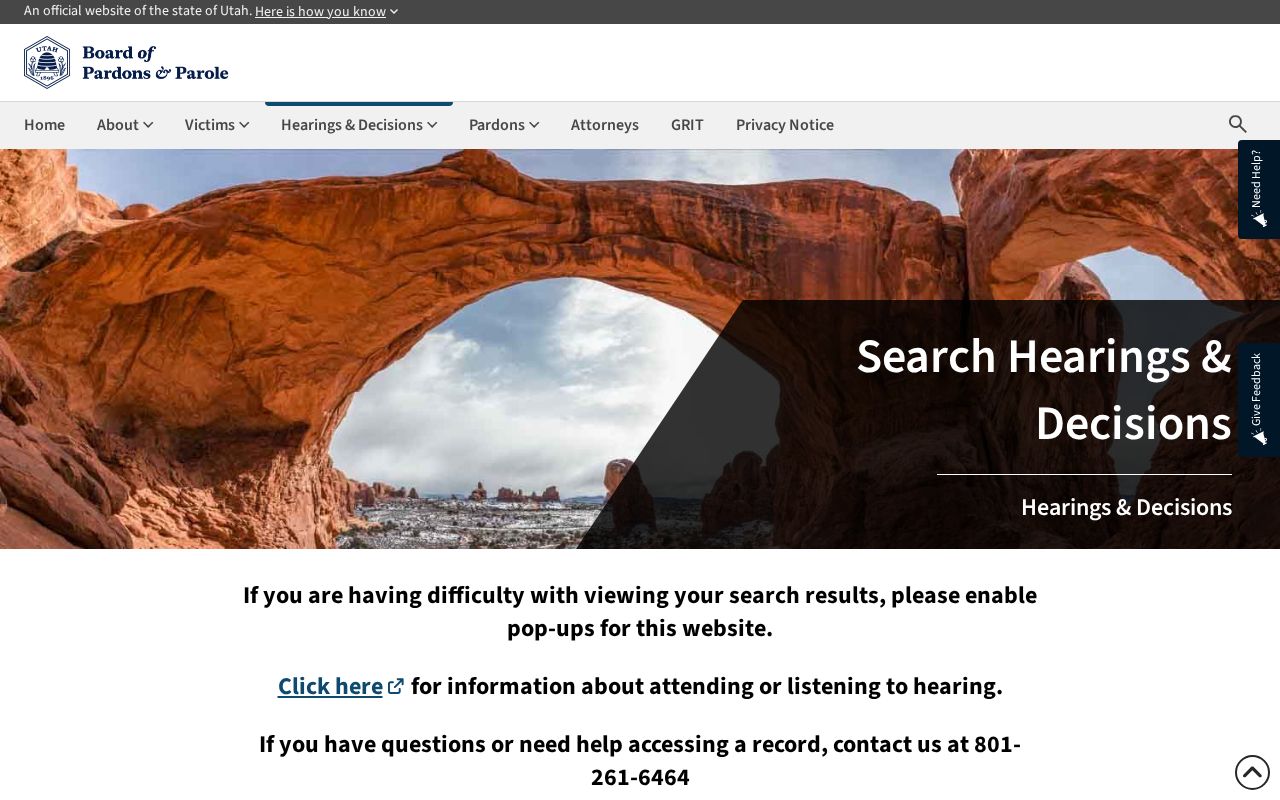
The decision view should be opened before treating a scheduled hearing or older grant as a release fact.
Adult Probation and Parole supervises both court-ordered probation and Board-ordered parole. Probation follows a court judgment; parole follows release from prison. A case manager shown by UDC can route a specific status question. No authoritative statewide, public, name-searchable AP&P absconder list was verified, so roster absence must not be labeled absconding.
Utah Release Alerts and Federal Records
Utah VINE is a specific-person custody check and notification service. Search the live Utah selector, resolve a match by reporting agency and identifiers, and read the exact event. Release, transfer, escape, death, and advance parole-date notices may be available for UDC records. Participating county coverage and contact channels must be checked live. A transfer alert is not community release, and no result is not proof of freedom.
The VINELink Utah screen is the approved source for search and registration.
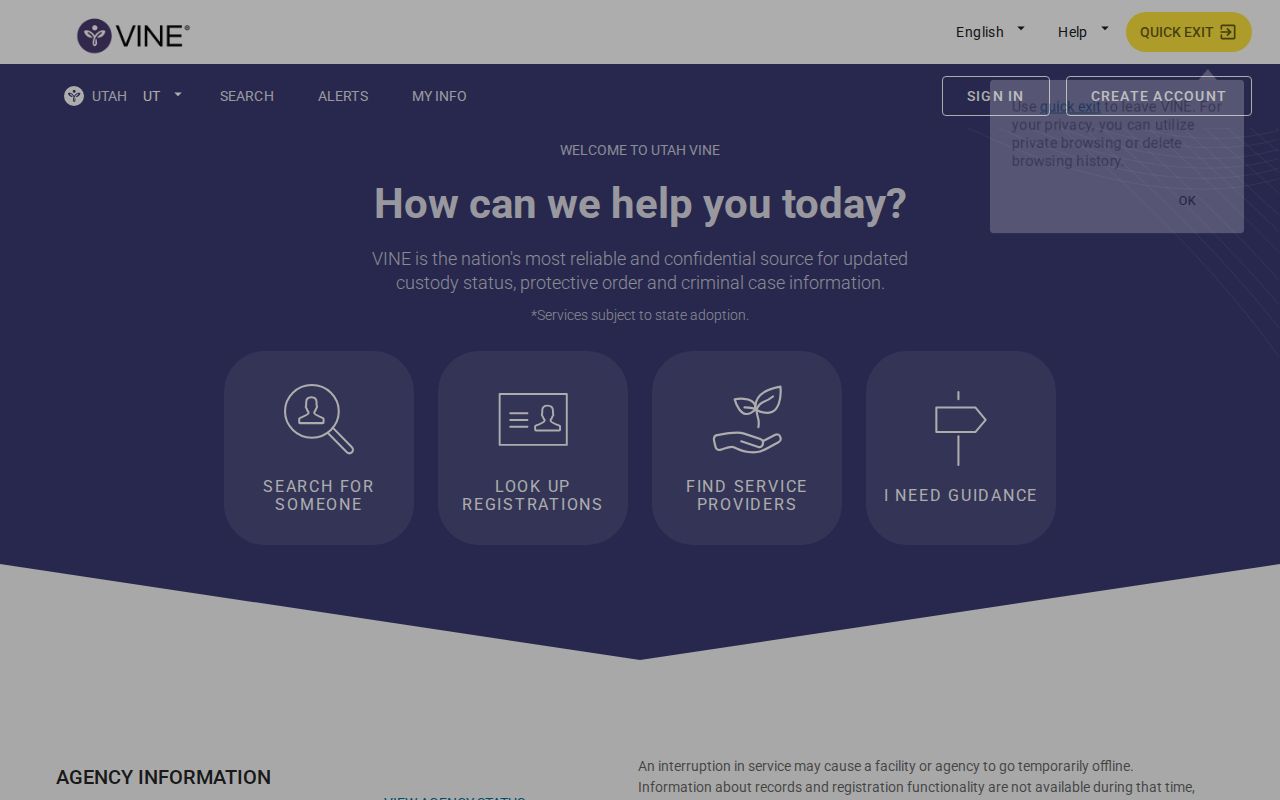
The selected agency and event type determine what the alert actually confirms.
For a federal sentence, use the BOP Inmate Locator, generally covering records from 1982 forward. A result may show “Released,” a release date, or that the person is not in BOP custody. BOP warns that later changes may not always appear, so compare the federal court docket when exact sentence facts matter.
The official federal locator shows the separate name and agency-number routes.
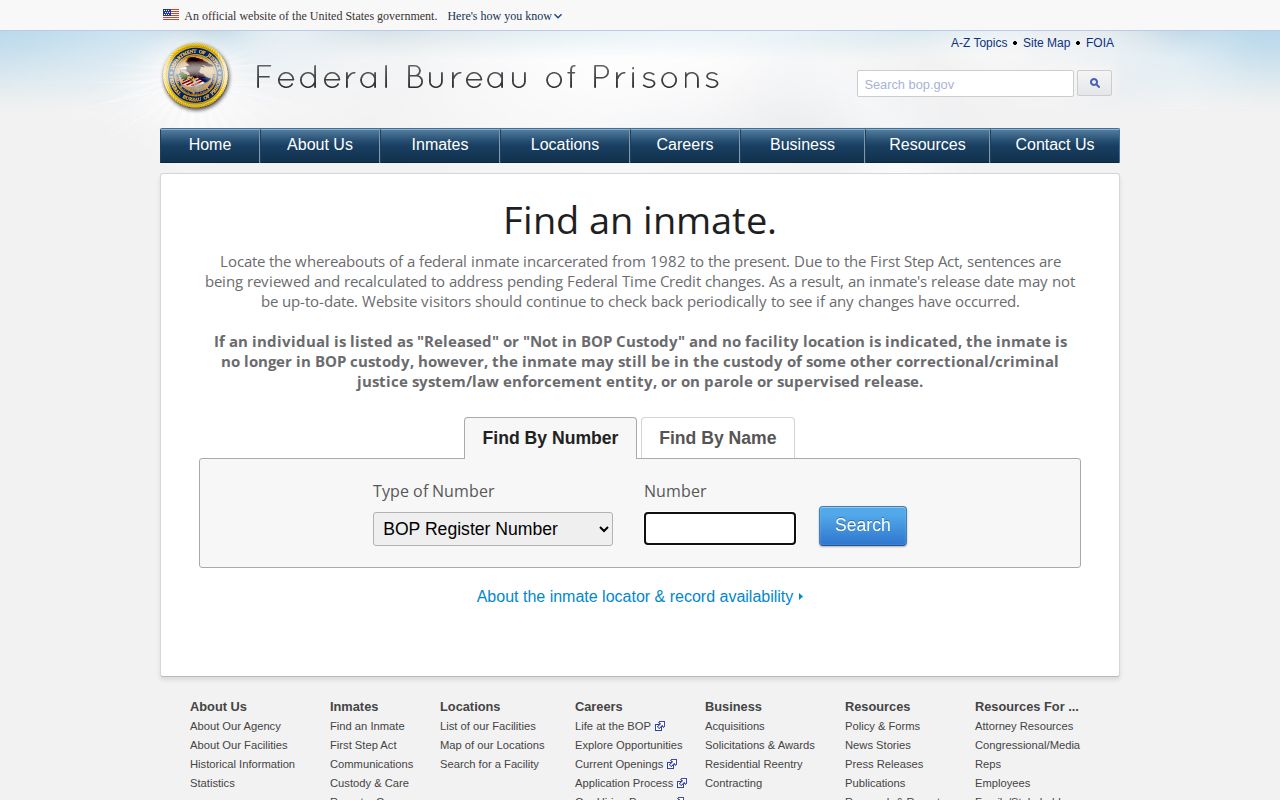
A BOP release does not resolve a Utah county record or an immigration hold.
When a local record supports transfer to immigration custody, use the official ICE Online Detainee Locator by A-number and country of birth or by exact biographical details. “Not found” can require contact with Enforcement and Removal Operations. It does not establish community release.
Utah Court Release Evidence
Utah Courts has two distinct access paths. Xchange provides public case information and electronically available public documents within its coverage. Search the matching criminal case for bail, recognizance, dismissal, judgment, sentence, jail credit, probation, commitment to UDC, amended sentence, or termination. A signed order explains legal authority but usually does not show the minute a jail completed processing.
The official Xchange information page describes its court-record scope.
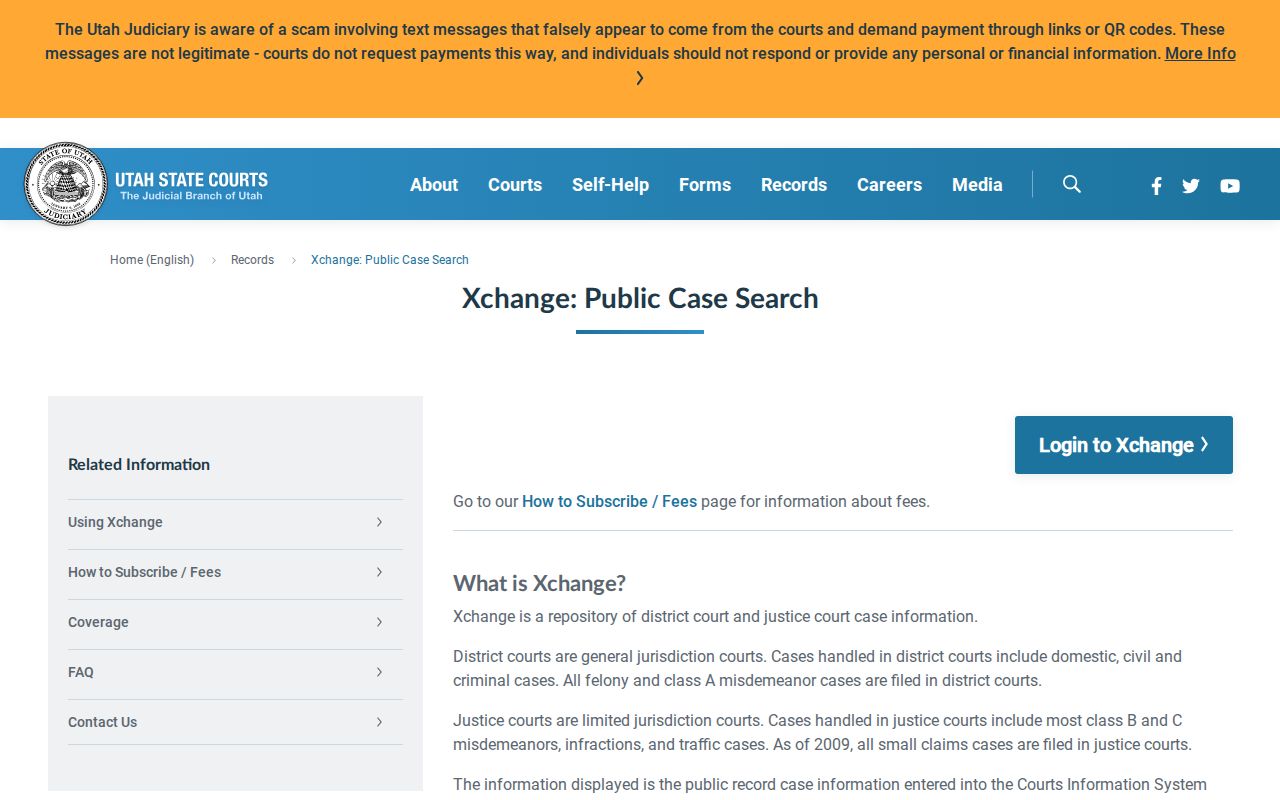
The court source complements a sheriff or UDC movement record instead of replacing it.
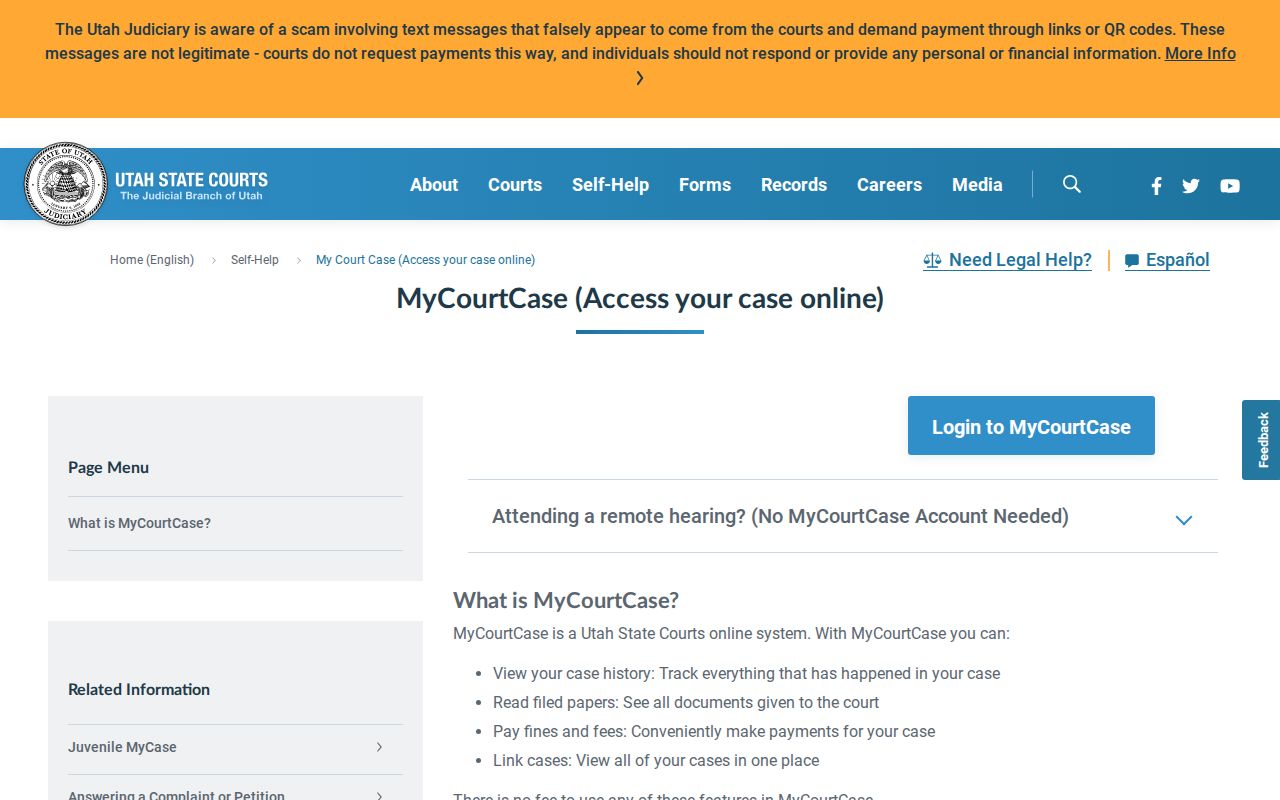
MyCase is free access for a party to that party's own supported cases. It is not a public people-search replacement. Expunged, sealed, private, and otherwise restricted matters may be absent from public access.
The official MyCase page makes that party-only role clear.
Neither court service is a live jail release clock, and absence from either is not proof that no custody event occurred.
Utah Booking-Photo Release Rules
Utah Code §17-72-802, effective November 6, 2025, governs county-jail booking photographs and publish-for-pay use. A sheriff may refuse a copy that will be placed in a publish-for-pay publication or site, and may withhold a photograph protected by GRAMA. The requester must sign the statement required by the statute for an ordinary copy.
The law also creates two removal timeframes for a publish-for-pay operator. The general period is 30 calendar days after a qualifying request. A seven-calendar-day period applies when proof supports acquittal or no prosecution, expungement, vacatur, or pardon. The law regulates those publishers and remedies; it does not erase every underlying court or agency record. No commercial publisher is needed to use the official record path.
An expungement changes public access to qualifying records through a legal process. It should not be inferred from a missing booking photo, a removed publisher page, or a name that no longer appears on a live roster. Confirm the court order and ask the originating custodian how that order affects the specific release record sought.