
UDC Released-Inmate Scope
UDC means the Utah Department of Corrections. It administers Utah's state prison system, places some state prisoners in county contract beds, and supervises people in the community through Adult Probation and Parole. It does not replace a county sheriff's booking or release record. A person awaiting trial in a county jail is expressly outside the public offender tool's scope unless a separate UDC commitment or supervision status applies.
The agency's identity matters because “released” can describe several points on one sentence. Parole ends prison confinement but starts conditional community supervision. A move to a community correctional center changes physical placement and may still leave UDC control in place. Expiration or termination ends the sentence or supervision under the governing order. Only the last event is a complete discharge from the UDC system.
The official UDC home page identifies the statewide agency behind these records.
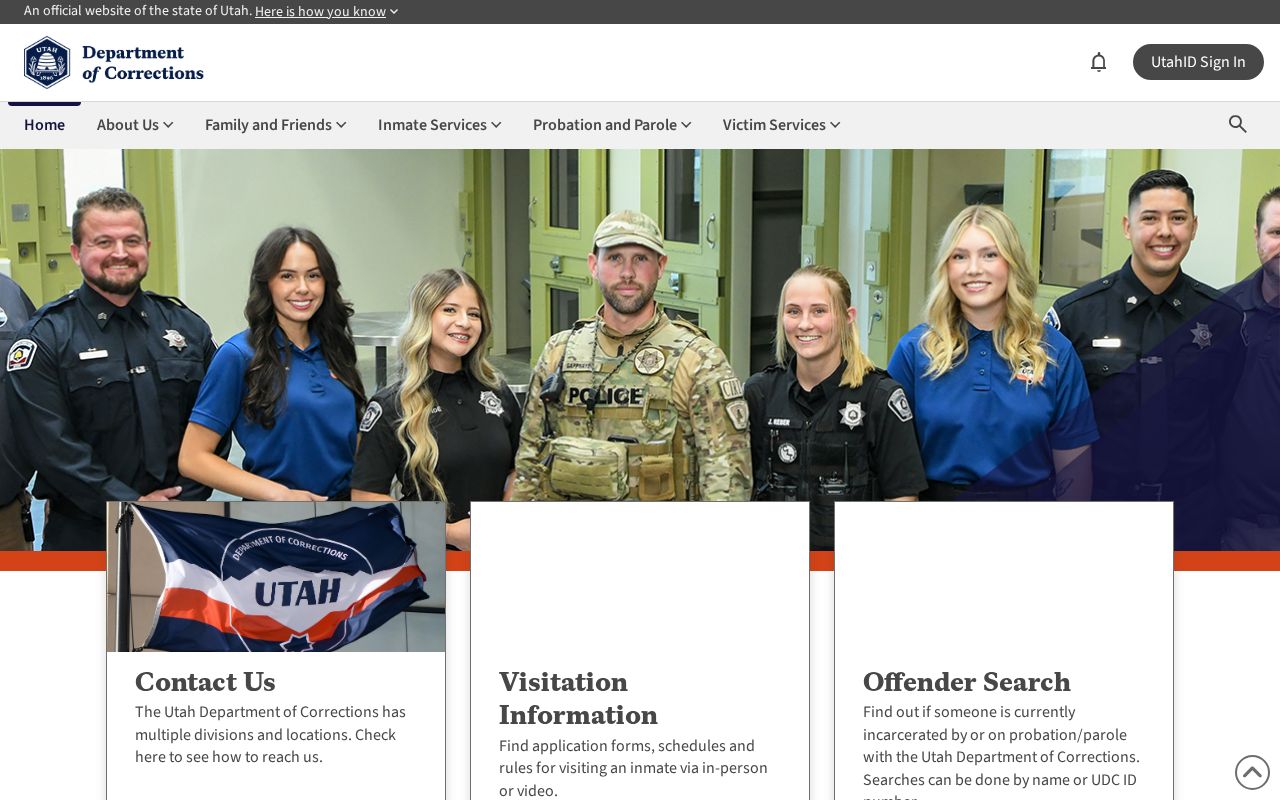
The captured agency page anchors the search in the correct custodian rather than a county roster or an unofficial index.
Use the UDC Offender Search
The official UDC offender search supports an offender-number search or a name search. A name query needs at least one letter in both the first-name and last-name fields; middle name is optional. Start with the full legal name and UDC number when known. Similar names are common, so compare date of birth and offender number before opening the expanded details.
- Open the UDC search and read its current-supervision warning.
- Enter the UDC offender number, or provide first and last name.
- Resolve possible matches with date of birth and the unique number.
- Open “more information” and read Location, Housing Facility, Release Date/Type, and case-manager details as a group.
- Compare a future or completed release event with the newest final Board order.
A community location and a case manager can support a finding that secure confinement ended while supervision continued. A prison or county-contract housing location points to current custody. No result proves neither freedom nor a clean history. It can instead mean full discharge, a different name, county-only custody, federal custody, immigration custody, or removal from the current-supervision population.
The live UDC search screen shows the actual statewide entry fields and scope notice.
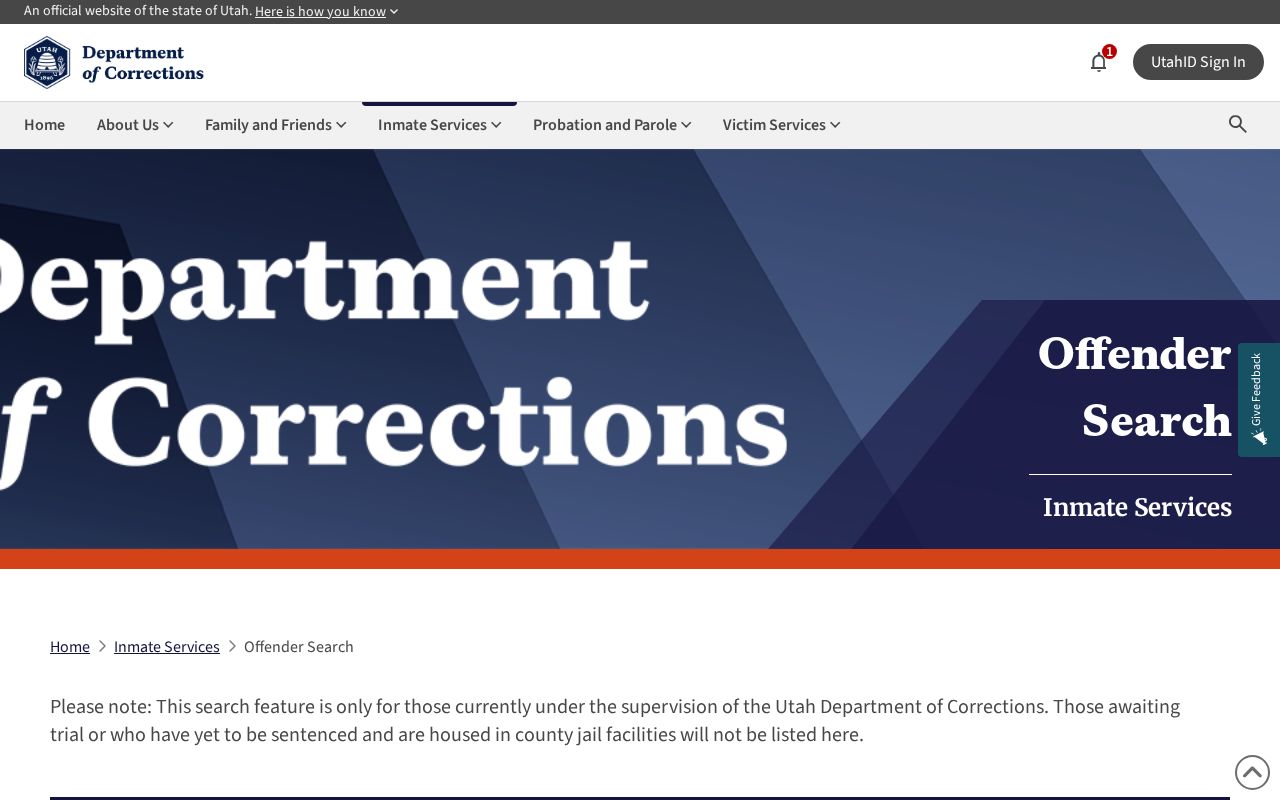
The screen confirms why a county detainee or fully discharged person may require a different record path.
Note: A similar name is not enough; use the offender number and date of birth to avoid joining two different Utah records.
UDC Offender Search Fields
The expanded public record uses specific labels. It does not present separate fields called “Projected Release Date,” “Tentative Release Date,” or “Earliest Release Date.” The combined Release Date/Type field must be read beside current location and the controlling Board decision. A date displayed there is useful, but it is not an unconditional promise of release at a set hour.
| Public field | How to read it |
|---|---|
| Offender # | The unique UDC identifier used to separate similar names and retrieve Board records. |
| Name and date of birth | Identity checks that should agree before details are attributed to one person. |
| Location | A custody or community placement clue, not by itself proof of sentence discharge. |
| Housing Facility | The state prison, county contract bed, or other listed placement tied to the current record. |
| Release Date/Type | The interface's combined date and event label, which must be checked against later Board orders. |
| Case Manager and email | A routing contact for a person still within UDC custody or supervision. |
Preserve three questions when reviewing UDC released inmates. When did secure confinement end? Did parole or another supervised placement begin? Has the sentence itself expired or been terminated? A UDC profile and final parole order can address the first two. A termination or expiration order, court record, or agency response supplies better proof for the third.
UDC also identifies several public facts outside the live result: legal status, offenses and sentence length, Board hearing date, and parole or expiration date. Legal status can read inmate, parolee, or probationer. These labels describe the current relationship to UDC. They do not convert a parolee into a person whose sentence is complete, and they do not supply the local booking history for an unrelated county case.
If two official fields conflict, preserve the access date and the exact words shown. Then check for a newer Board order, a recent move, or a corrected sentence calculation. A stale housing value should not override a later final order, but an order alone may not prove physical processing. The movement record connects those two pieces.
UDC Release and Board Orders
Utah uses an indeterminate prison framework. The sentencing court usually imposes a statutory range, while the Utah Board of Pardons and Parole decides whether and when parole occurs within its authority. Parole is conditional release from imprisonment. It is not an acquittal, an expungement, or automatic completion of the sentence.
Open the Board hearing and decision search with the name or offender number. Review the newest linked final order and record its decision date, effective date, outcome, contingencies, and any later order. A scheduled hearing is not a grant. A pending decision is not a release date. A redetermination or rescission can displace an older action.
- Parole
- Conditional release from prison with continued supervision.
- Termination
- A Board action ending supervision or the sentence under the governing law and order.
- Expiration
- The legal endpoint shown by the applicable sentence and official record.
- Rescission
- A process that can withdraw a release date previously granted.
The Board's official hearing-type page distinguishes original, rehearing, redetermination, rescission, violation, and termination processes.
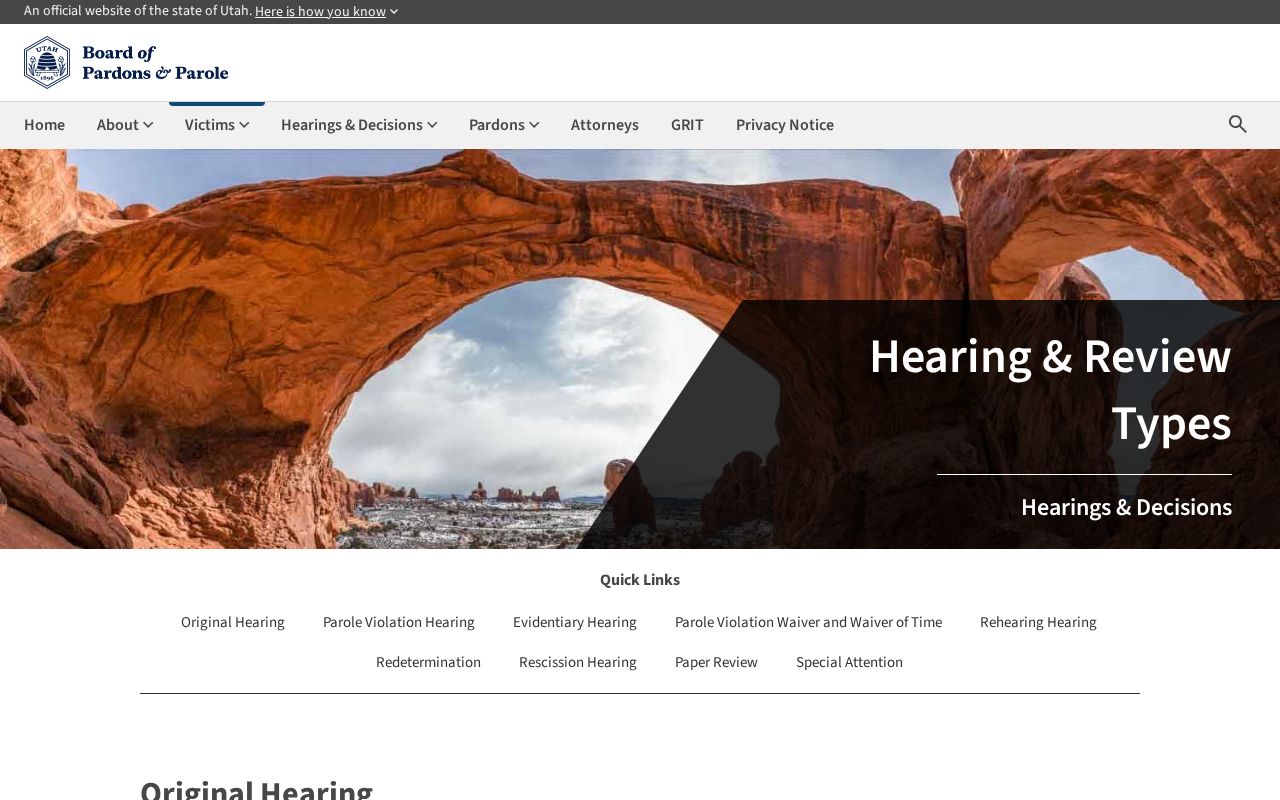
The distinctions shown there prevent a hearing listing from being mistaken for a completed UDC release or discharge.
Utah Code §77-27-9 generally bars release before the minimum term unless the Board uses the statute's mitigating-circumstances process and makes the required findings. Mandatory-minimum and life-without-parole provisions add limits. Section 76-3-202 governs parole duration and termination for applicable sentences. For many post-2018 indeterminate paroles, supervision can extend through the maximum term unless the Board ends it earlier under governing law and guidelines.
Time in the community, absconding, evasion, and later custody events can affect the legal calculation. The date cannot be derived from elapsed calendar time alone. A current final order, not a general rule of thumb, is the best public statement of the Board's actual action.
UDC Earned-Time Release Credits
Utah does not apply one universal “serve 85 percent” shortcut to every state prisoner. The court's indeterminate range, offense-specific minimums, Board action, sentence credit, program contingencies, conduct, and other holds can all change the path. A future UDC Release Date/Type must be treated as the displayed value as of the search date.
Utah Code §77-27-5.4 directs the Board and UDC to operate an earned-time program tied to approved case-action-plan programs. UDC describes mandatory cuts of four months for each of up to two qualifying programs, for a maximum mandatory reduction of eight months. Only the first of two vocational programs counts for the mandatory track; a later vocational completion may be submitted for discretionary review.
The credit does not operate as a self-executing clock. Exclusions include an already ordered date that leaves too little transition time, life without parole, service to expiration, no current release date, an unmet release contingency, or an existing termination date. UDC reports qualifying completion and the Board applies the credit through its process. A rescission proceeding can also affect a previously available date.
Scheduled versus actual: A Board-controlled or UDC-displayed date can change before physical release because a contingency, rescission, hold, or later order intervenes.
Utah State Release-Day Routing
Utah has a notable central release practice. UDC's July 2024 Release Day FAQ says releases and paroles are processed every Tuesday. Most occur at the visiting building of the Utah State Correctional Facility in Salt Lake City. Almost everyone serving a UDC sentence in a county contract jail is brought to USCF for release; direct release from a contract jail is described as extremely rare.
A person paroling to a UDC community correctional center is transported there by Corrections staff. That movement is a controlled parole placement, not proof that supervision ended. When no ride is available, a release-team member or volunteer can take the person to a nearby UTA TRAX station, with the no-ride group released last. The official flyer asks a pickup person to bring one shirt and one pair of pants and warns that entry to prison property involves a warrants check. No official statewide cash gate-money amount was found, so none should be inferred.
The UDC correctional-facilities page shows the prison, county-placement, and community-center structure behind that route.
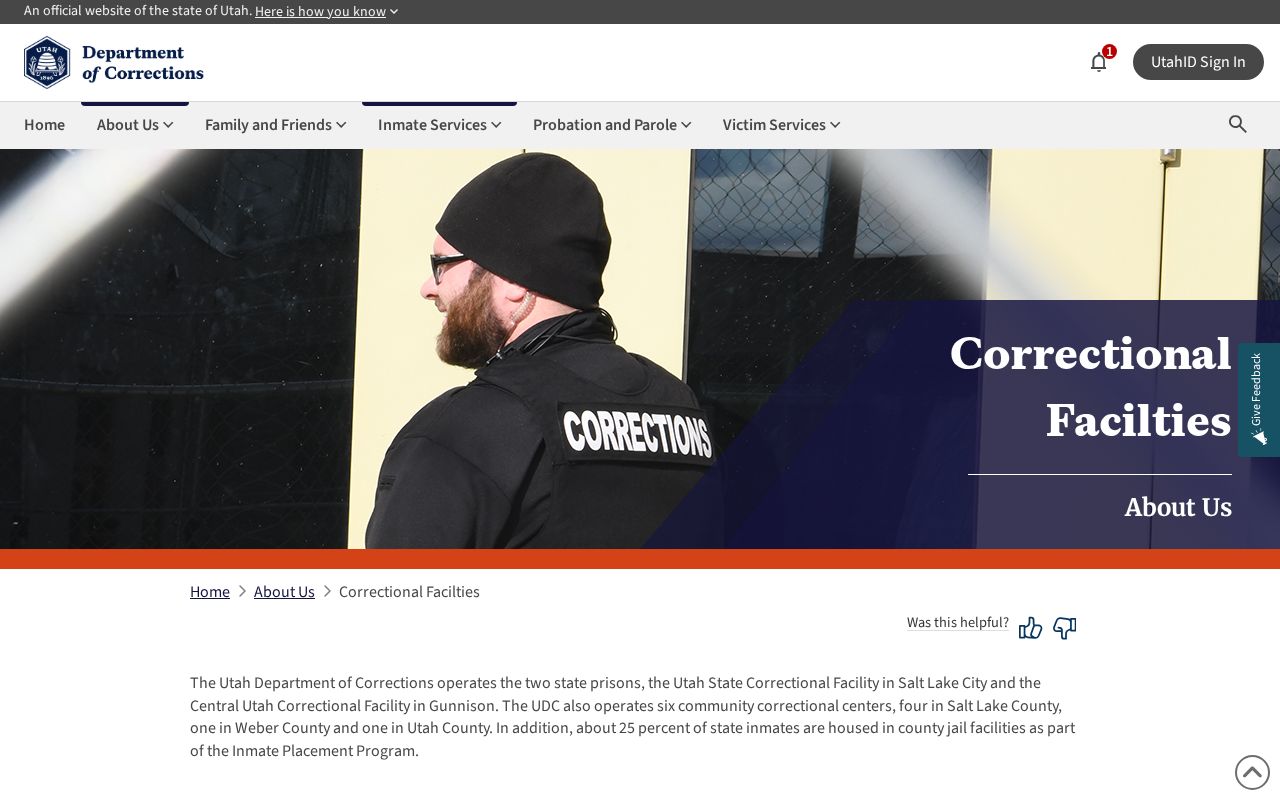
The facility inventory explains why physical housing on one day can differ from the place where UDC processes release.
Note: A transfer to a county contract bed or community correctional center remains distinct from final release and sentence discharge.
UDC Release Trends by Year
Dated figures need precise labels. UDC's FY2023 to FY2024 annual report uses average daily populations across the entire fiscal year for institutional, probation, and parole charts. Those averages are not counts of unique people released. The separation also proves a key point: Utah residents on parole have left prison but remain part of the supervised population.
A different measure comes from the FY2021 UDC annual report. The Records Office processed 3,217 admissions and 3,073 releases from UDC custody in that fiscal year. It also handled 1,168 GRAMA requests or subpoenas, 51 GRAMA appeals, and 324 expungements. These are agency transactions, not necessarily unique people.
| Period | Release measure | Meaning |
|---|---|---|
| FY2011 | 4,621 prison releases | Start of the dated CCJJ trend series. |
| FY2020 | 3,005 prison releases | End of that published ten-year CCJJ series. |
| FY2021 | 3,073 UDC custody releases | Records Office transactions reported by UDC. |
The Utah Commission on Criminal and Juvenile Justice series declined from 4,621 releases in FY2011 to 3,005 in FY2020. Its later update described a March through November 2020 surge followed by stabilization near earlier monthly averages. These figures describe past fiscal years. They are not a live 2026 total and should not be used to estimate whether one person has been released.
The same CCJJ series reported that the share released to parole fell from 79.1 percent across FY2011 through FY2015 to 61.4 percent across FY2016 through FY2020. The change does not tell why any individual left custody. It also cannot be merged with an annual average parole population, because a flow of release events and the average number supervised are different measures.
For an individual search, statistics are context only. The offender profile, final Board order, movement record, and legal-status history remain the evidence. Always retain the fiscal year and the agency's label when citing a statewide figure.
UDC Versus County Release Records
The UDC offender search covers people currently incarcerated by or supervised through the state system. County sheriffs retain ordinary pretrial and county-sentence booking and release records. A county roster is mainly a current-custody view. Once a person leaves it, use that county's release or movement record rather than assuming UDC will contain the event.
| Question | UDC state system | County jail system |
|---|---|---|
| Typical person | State prisoner, parolee, or UDC probationer | Pretrial detainee or county-sentenced person |
| Release evidence | UDC profile plus latest Board order | Sheriff release or movement record plus court order |
| Historical fallback | Focused UDC GRAMA request | Request to the sheriff that keeps the booking record |
Use the Utah County Directory to reach the relevant county site. Piute and Wayne have no operating county jail and may route people to Sevier County. Morgan reports no jail beds and uses facilities in Weber or Davis. The arresting county, housing county, and state receiving agency can therefore be different custodians.
UDC Release Records Through GRAMA
When a fully discharged person no longer appears, use the UDC public-information and GRAMA route. UDC identifies legal status, offender number, housing, offenses and sentence length, Board hearing date, and parole or expiration date as public information subject to classification and availability. Safety, privacy, health, security, and protected case material can still be withheld or redacted.
Describe the record with reasonable specificity. Give the full name, known aliases, UDC number, an approximate custody period, and only enough identifying data to separate records. Ask for precise items such as legal-status history, release or movement record, parole or expiration date, releasable sentence calculation, or termination documentation. Request segregable public portions when part of the file is classified.
- Check the current offender search and Board orders before filing.
- Identify the narrow record and a useful date range.
- Submit through UDC's designated GRAMA route with contact details.
- Review any fee estimate or classification decision before expanding scope.
- Use the denial notice's stated appeal route if access is refused.
Under Utah Code §63G-2-204, an ordinary response is due as soon as reasonably possible and no later than ten business days. The five-business-day path requires a public-benefit showing. Extraordinary circumstances can extend the response, but the agency must identify the circumstance and give the date or estimate required by law.
The official UDC public-information page identifies public fields and the correct records channel.
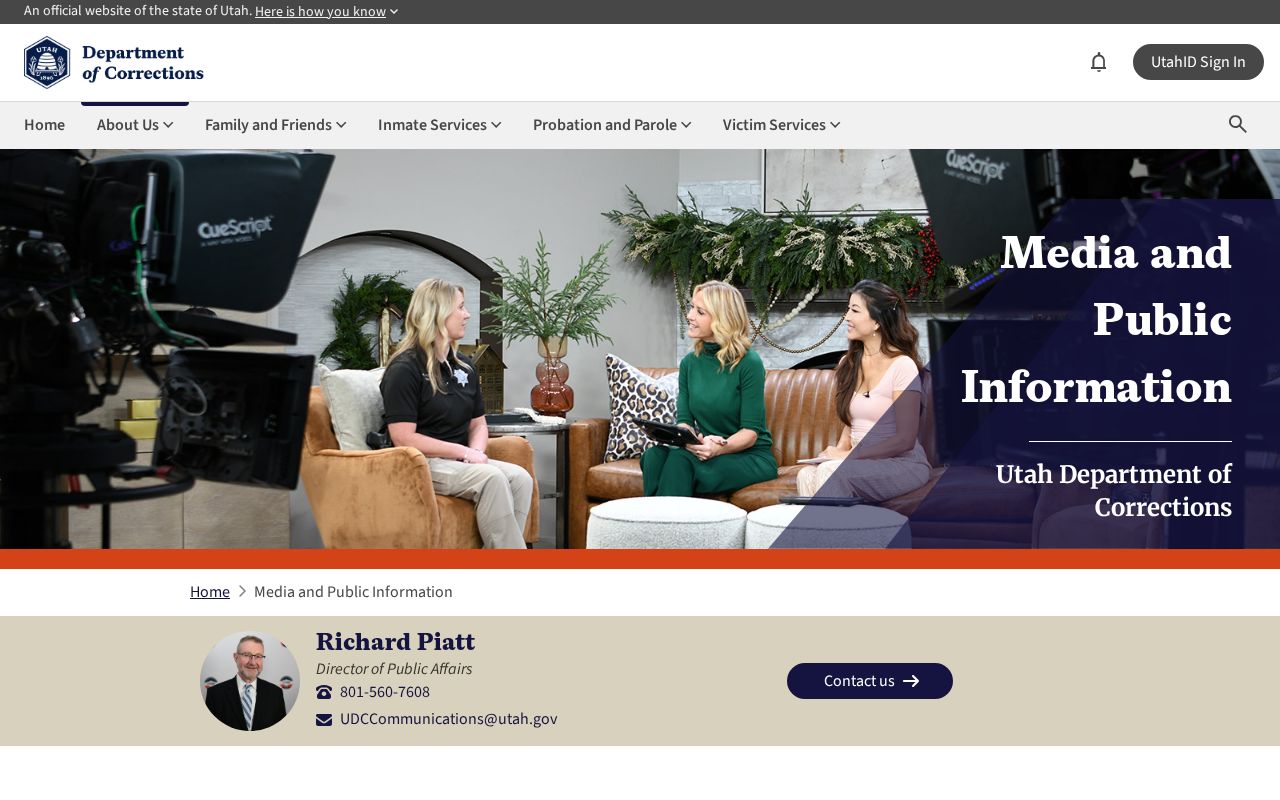
The page also cautions that an offender record can contain both public facts and classified material requiring redaction.
Reasonable fees may reflect actual cost under §63G-2-203. The first quarter-hour generally cannot be charged, and an estimate above $50 can trigger prepayment. Since July 2023, correctional health records are routed through the Utah Department of Health and Human Services rather than UDC. That separate custody rule does not make private health information part of an ordinary release-record request.
A written denial must identify the withheld record or part, provide the legal basis, and state the appeal route and deadline. Protected classifications can cover recommendations based on supervision, diagnosis, or treatment. Private records may be available to the subject or an authorized representative under different access rules. None of those provisions supports a claim that every item in an institutional file is public.
Historical confirmation works best as a chain. Save the current search result or no-result date, retrieve the latest public Board order, review the matching court disposition, and request only the missing movement or termination fact. This reduces delay, limits fees, and gives UDC enough detail to locate the responsive record.