
What Utah VINE Covers
VINE is an automated custody-information and notification service. VINELink is its public web entry point. In Utah, the service can show an event supplied by a participating agency and let a user register for later notice. The Utah Department of Corrections also describes VINE coverage for people in its system. That state layer can include a release from prison, transfer, escape and return, death, and advance notice of a parole release date.
The official Utah VINELink screen is where a specific-person search and available notification options begin.
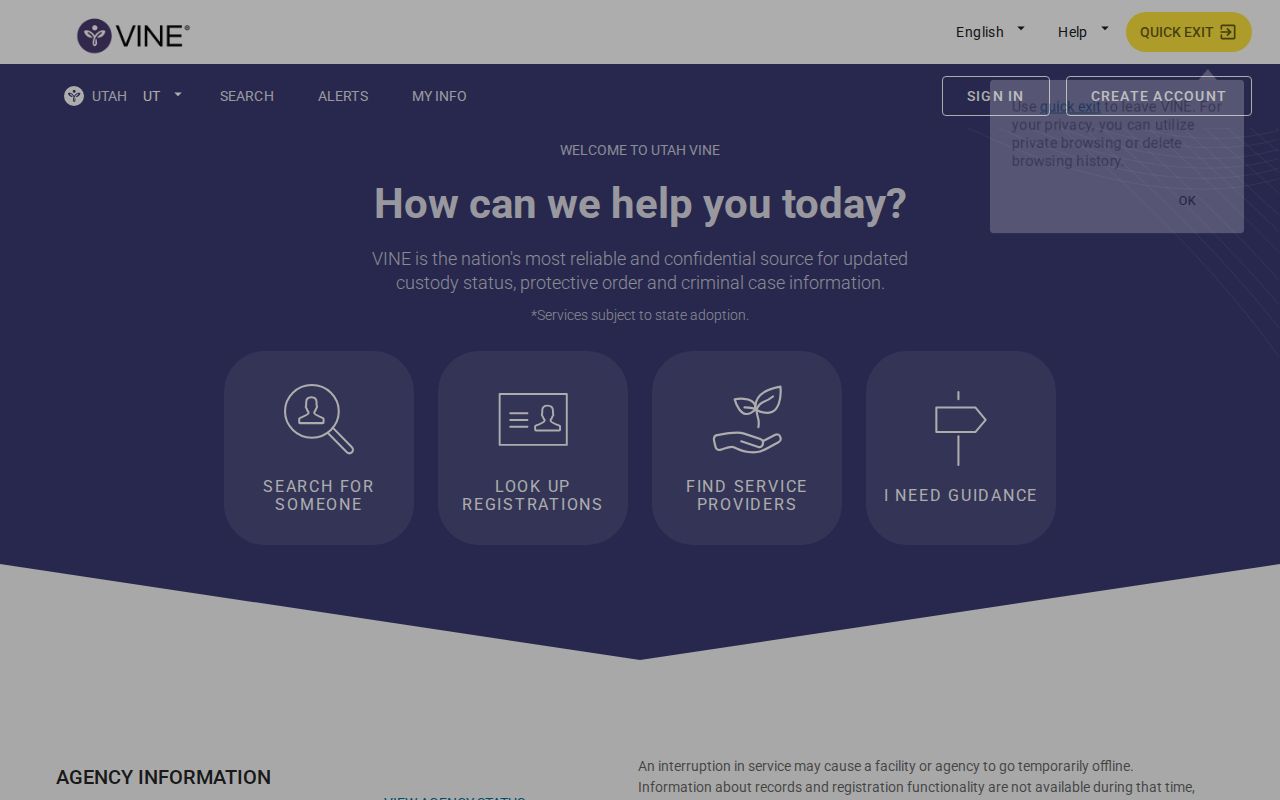
Coverage must still be read agency by agency. UDC participation does not prove that every county jail feeds the same fields or even appears in the live selector. Local booking systems, state prison records, federal custody, and immigration custody are separate channels. VINELink is most useful when the correct reporting agency is visible in the result and its event is read exactly as posted.
Search a Utah Inmate on VINELink
Begin with enough detail to tell one person from another. Name spelling, an offender or booking identifier, and the likely reporting agency can prevent a false match. The live Utah form controls which fields are offered. Do not assume that every agency accepts the same identifier or publishes the same detail.
- Open Utah in VINELink and choose the offered custody or offender search.
- Enter the person's legal name or the identifier accepted by the selected search.
- Compare each possible match by agency, identifying details, and offender number when displayed.
- Open only the record that can be tied to the correct person and custodian.
- Read custody status, location, event type, and event date together before drawing a conclusion.
If the expected county agency is not shown, do not select a nearby county as a substitute. Confirm the county of arrest and the place of physical housing. Utah counties sometimes house people outside the arresting county, while UDC may place a state prisoner in a county contract bed. The Utah County Directory routes to local release sources when a county record needs a direct check.
Note: A similar name is not enough; match the reporting agency and all available identifiers before relying on a Utah VINE event.
Read a Utah VINE Record
A VINE result is an agency-transmitted custody record. Its strongest value is the event language, not a guess based on whether a name appears. An explicit release event can document what a participating agency sent. A transfer means the person moved, which may place the person in another jail, prison, or correctional setting. It is not the same as release to the community.
| Record item | How to read it |
|---|---|
| Name and identifier | Use them to distinguish the intended person from similar results. |
| Reporting agency | Shows which participating custodian supplied the event. |
| Custody status | States the status the agency currently transmits, subject to update lag. |
| Location | Names the facility or placement when the agency provides it. |
| Event type | Separates release, transfer, escape, return, death, or another change. |
| Event date | Gives the date attached to that event, not a universal sentence-discharge date. |
For a UDC record, compare VINE with the corrections offender search. The UDC search displays current-supervision details such as Location, Housing Facility, and Release Date/Type. A community location may show that secure confinement ended while parole continues. Full discharge is a separate question and may require an agency or Board record.
Register for Utah Release Alerts
Registration should begin from the verified person record. This keeps the alert tied to the intended person and agency. Available channels can vary in the live system. UDC says phone and email notice are offered for its VINE service, while the matching VINELink record may present text or application options as well. Use only what the record actually offers.
- Open the correct record and choose its option to register for notifications.
- Select an offered channel, such as phone, text, email, or an application alert.
- Enter the requested contact details and check them for errors.
- Create or enter any confirmation code or telephone PIN requested by the service.
- Complete the displayed confirmation and keep the registration details in a safe place.
The UDC Victim Notification Services page explains the Utah corrections events and registration path.
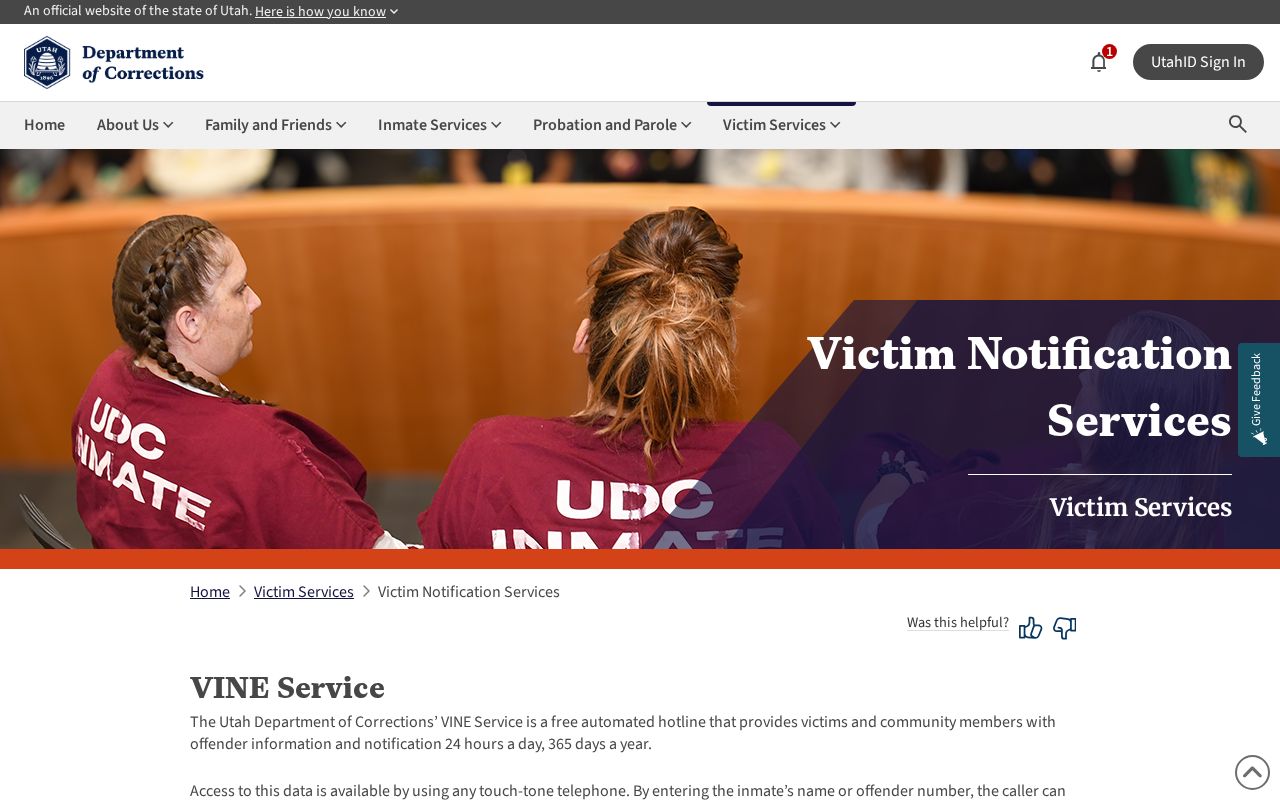
UDC states that registration may be anonymous and that more than one phone number can use the same PIN. It also offers help from English- and Spanish-speaking operators. Registration is for notice of a later custody event. It does not reserve a release time, change a Board order, or guarantee that every local jail event will be available through the state corrections feed.
Note: Keep the confirmation details, then revisit the verified record if contact information changes before the expected custody event.
Utah VINE Call and PIN Flow
Telephone notice uses the PIN to confirm that the registered recipient received the call. UDC says its free automated VINE service operates around the clock throughout the year and can be reached online or through Utah's toll-free VINE number, 1-877-884-8463. For UDC notifications, the system may call or email hourly for up to 48 hours until a telephone recipient confirms with the PIN.
If no one answers, UDC says the system leaves a message and calls again within two hours. The PIN has one narrow purpose: it acknowledges the automated call. It is not an offender number and should not be treated as a search credential. A recipient who changes a phone number or email address should review the active registration so a later notice does not go to an old contact.
Participating Utah VINE Agency Gaps
Utah VINE is both a custody check and an alert service, but it is fed by participating agencies rather than one permanent statewide archive. This is the state's distinctive coverage issue. A county may transmit different fields, update on a different schedule, or not appear for the sought record. Confirm current coverage in the live agency selector instead of assuming that all Utah counties participate in the same way.
A missing result has several possible meanings. The agency may not participate, the name may differ, the record may have aged out, or the person may be held by another county, UDC, the Federal Bureau of Prisons, or immigration authorities. A person who was fully discharged from UDC supervision may also be absent from a search whose stated scope is current supervision. None of those possibilities proves community release.
The UDC statewide facilities page helps explain why state custody can include prison, contract, and community correctional placements.
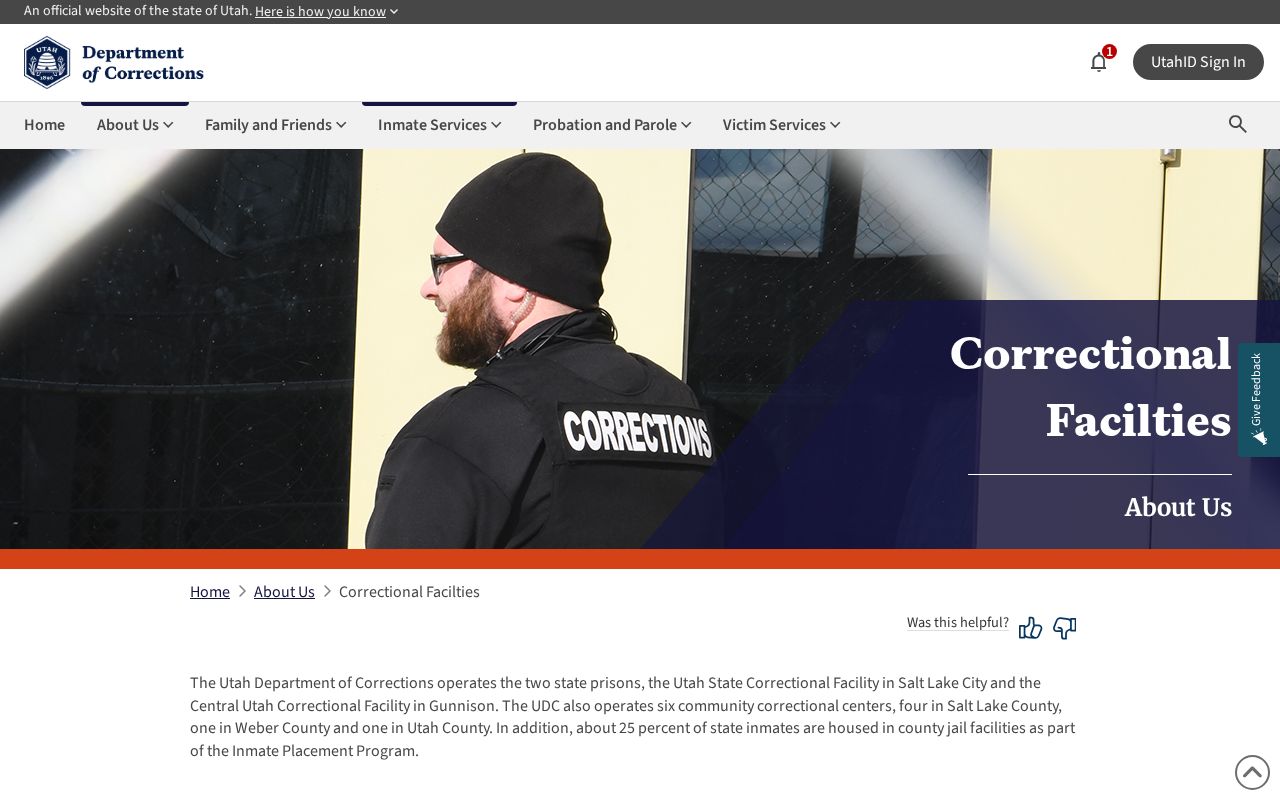
Movement between those placements must be read by event type. UDC identifies alerts for moves to county jails, moves between its Salt Lake City and Gunnison facilities, and moves to a community correctional center. Those are useful notices, but they do not all mean that the sentence ended or the person entered the community without supervision.
Note: Always preserve the agency name and event text because Utah VINE records from different custodians do not carry one uniform historical scope.
Utah VINE Release Event Meanings
UDC lists several events that can trigger notice, and each answers a different question. Release from prison describes an exit from secure state prison custody. Advance parole-date notice points to a future Board-controlled event that may still change. An escape alert reports an unapproved departure, while a return notice reports that the person is back in custody. A death notice is neither a release nor a transfer. Reading the exact event keeps these records from being grouped under one broad custody-change label.
Transfer alerts require the most care. UDC can report moves to county jails, moves between the state facilities in Salt Lake City and Gunnison, and placement in a community correctional center. Each may change the address shown in the record. None, by itself, proves sentence discharge. Even a community placement can remain part of a correctional or supervised status.
A parole-release-date alert can be useful for planning a later verification, but it should not replace the final check. Search the Board record for any newer action, then review UDC status after the effective date. If the record instead came from a county agency, verify it with that county. The event's reporting agency determines where the follow-up belongs.
Confirm a Utah VINE Release
After a release alert arrives, return to the record and read the latest event. Then check the system that owns the custody history. For a state prisoner, use the UDC offender search and compare Location, Housing Facility, and Release Date/Type. For a county booking, ask the arresting or housing county for its release record. If the event concerns parole, a final Utah Board order can establish the decision and effective date.
The UDC search screen provides the current-supervision fields used in that state-level cross-check.
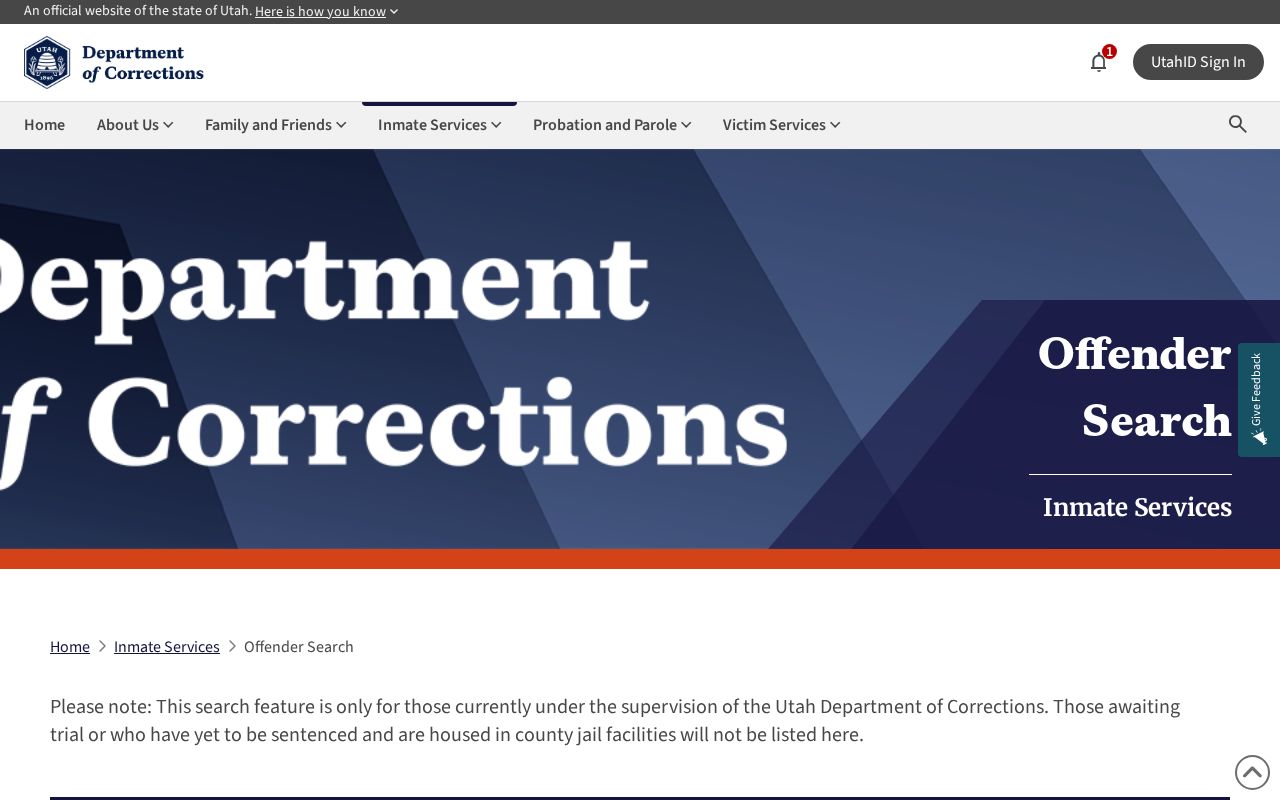
Do not force the sources to answer a question outside their scope. VINE reports an agency event. UDC reports current corrections custody or supervision. A Board order records the parole authority's action. A county movement record documents a local jail release. When those sources conflict, note the access time and ask the agency that originated the disputed event.
Utah VINE and Federal Custody
VINELink is not the locator for a person in federal Bureau of Prisons custody. Use the BOP Inmate Locator for that jurisdiction. Its historical records can include a release date or a statement that the person is not in BOP custody, but those words do not establish a Utah county release. Immigration detention is separate as well and should be checked through the official ICE detainee locator.
Each source tracks its own event. A county release may be followed by a federal transfer. A UDC movement may end state prison housing while parole continues. A BOP release date does not describe a later state hold. Start with the agency named in the VINE record, then follow any documented transfer to the next custodian.
- Release
- An agency-reported end to its custody event, which may still lead to supervision or another custodian.
- Transfer
- Movement to a different facility, placement, or authority rather than release to the community.
- Parole
- Conditional release from prison while supervision and the sentence continue.
- Discharge
- Termination of the sentence or supervision, distinct from a prison release alert.