
Utah Projected and Actual Release
A projected date is the best current statement of when a custody change may take effect. It is not proof that the person has walked out. Utah adds another layer because most prison sentences are indeterminate. The court sets a range, while the Utah Board of Pardons and Parole makes release decisions within the law. An actual release is the completed movement from prison custody to parole, another placement, or the community. Full discharge is later still when the sentence and supervision end.
The distinction matters when reading a public record. A parole date can mark release from prison but not discharge from the sentence. A transfer to a county contract bed or community correctional center also does not necessarily mean unrestricted community release. Read the date beside its type, the present location, and the latest Board order. Those items answer different questions and should not be collapsed into one label.
UDC Utah Release Date Field
The UDC Offender Search is the first public check for a state prisoner or a person still on UDC probation or parole. The live result uses the exact field name Release Date/Type. It does not provide separate public fields called projected, tentative, earliest, or maximum release date. A future entry can be useful, but its type and the current record must guide its meaning.
The official UDC search screen shows where that statewide lookup begins.
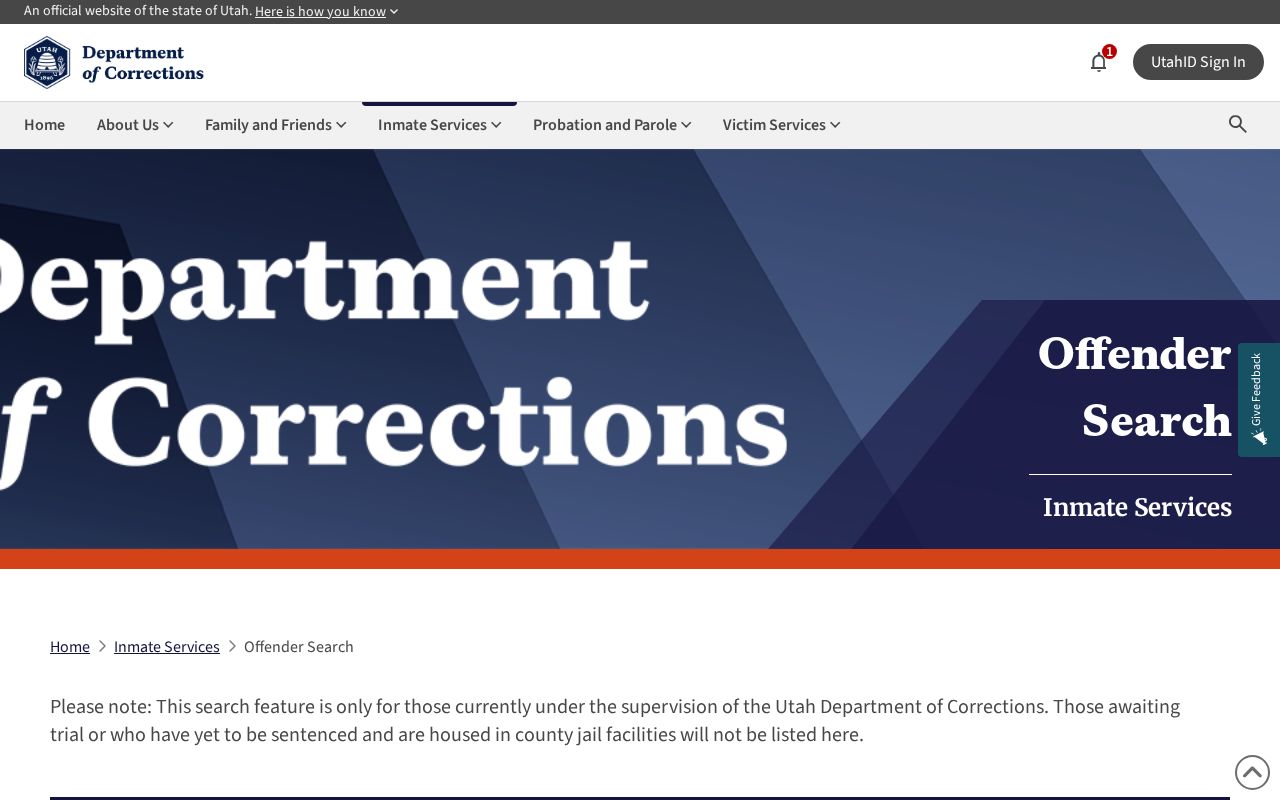
Use the form by offender number when one is known, or by first and last name. UDC requires at least one letter in each name field. Open the expanded record only after resolving similar names by offender number and date of birth. The detail can show Offender #, Name, Location, Housing Facility, Release Date/Type, Case Manager, and Case Manager Email. Together, those fields can separate prison housing from a supervised community location.
Find a Utah Projected Release
A sound Utah release-date check starts with jurisdiction, not a broad name search. UDC does not cover every person in a Utah jail. Its own warning says the search is for people currently under UDC supervision, and it excludes county detainees who await trial or have not yet been sentenced. Use the following sequence for a person committed to state custody.
- Search UDC by offender number or legal name, then open the correct expanded record.
- Record the Location, Housing Facility, and exact Release Date/Type shown on the same access date.
- Search the Board by offender name or number and open the newest final order, not just a hearing entry.
- Read the decision, effective date, contingencies, and any later redetermination or rescission.
- If the records conflict, request the releasable sentence calculation or movement history from UDC.
This process avoids a common error. A hearing date is not a release date. A matter that still awaits a decision is not a parole grant. Even an older grant may have been changed by a newer order. The complete statewide search and release-record paths are also organized on the Utah released inmates home page.
Note: Save the access date with each result because a later Board action can replace the date that appeared during an earlier check.
Utah Board Release Orders
The Board Search Hearings and Decisions tool supplies the public order that gives a UDC date context. It accepts offender searches and date searches. When looking for one person, use the identifying record and review all later entries. The Board distinguishes original hearings, rehearings, redeterminations, rescission hearings, parole-violation hearings, evidentiary hearings, paper reviews, and termination or expiration processes. Each has a different role.
The Board's official hearing-type explanation helps identify which proceeding produced a decision.
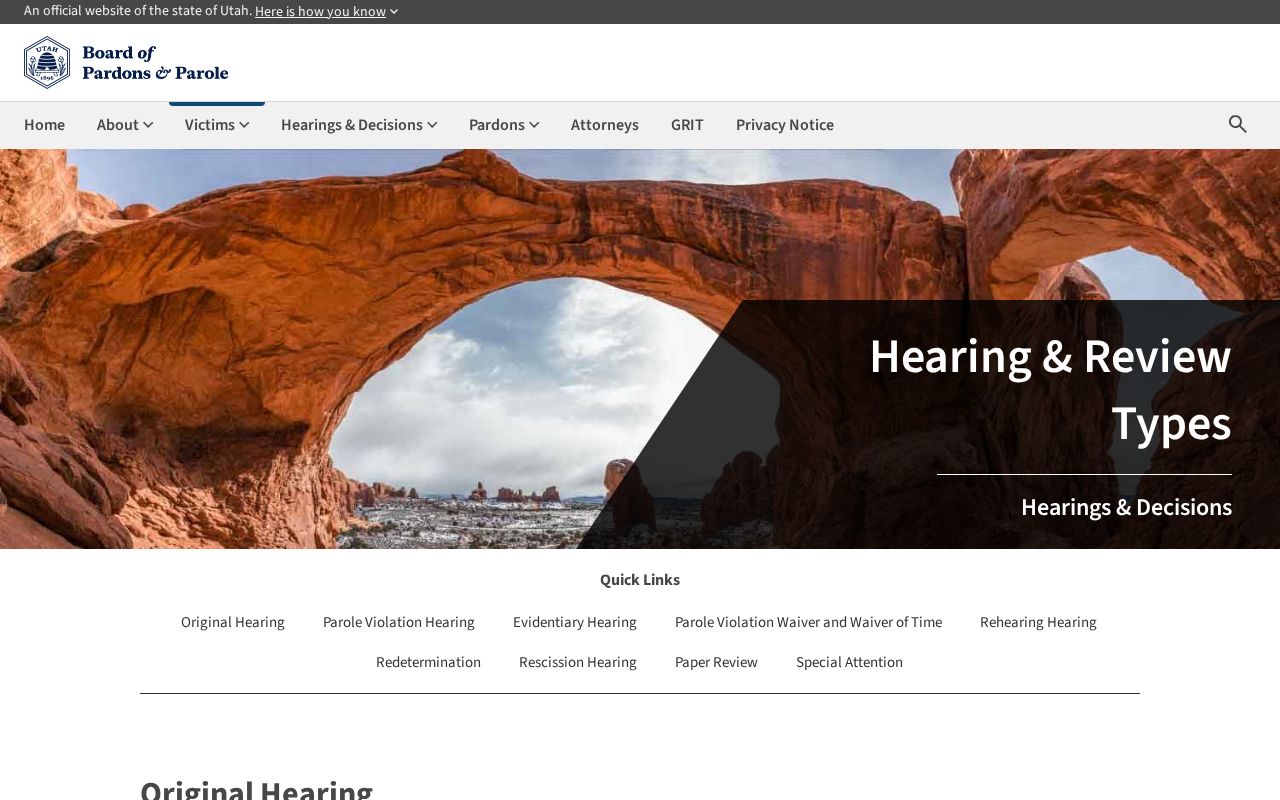
A final order may set an effective parole date, deny release, continue the case, require a program, or schedule later review. Read any conditions and contingencies. If a treatment or case-plan task must occur first, the calendar date alone is incomplete. Then check the UDC Location and Housing Facility fields again. The Board record explains the authority; the UDC record shows current corrections status and placement.
Note: Use the newest final order because a later redetermination or rescission can replace the release terms in an earlier decision.
Utah Earned Time Is Program-Specific
Utah does not support the claim that every state prisoner serves 85 percent of a sentence. The actual framework combines the court's indeterminate range, offense-specific limits, Board action, case-plan programs, sentence credit, conduct, and other lawful holds. Utah Code §77-27-9 generally bars release before the minimum term unless the Board follows the statute's mitigating-circumstances route and makes the required findings. Some mandatory-minimum and life-without-parole rules add further limits.
Under Utah Code §77-27-5.4, the Board and UDC operate an earned-time program tied to approved work in a person's case action plan. The UDC Earned Time Credit Programs page explains the program's practical limits.
| Earned-time point | Utah rule |
|---|---|
| Qualifying completion | Successful completion of an approved case-action-plan program can support a four-month mandatory cut. |
| Mandatory maximum | Up to two qualifying programs can produce no more than eight months in mandatory cuts. |
| Vocational programs | Only the first of two vocational completions counts as mandatory; a later one may be sent for discretionary review. |
| Board action | UDC reports completion, but the Board incorporates the credit through its process. |
| Exclusions | The statute limits credit in specified cases, including no current release date, unmet contingencies, service to expiration, and life without parole. |
The credit is not a free-running countdown. A previously ordered date may leave too little transition time. An existing termination date or rescission matter can also affect how the credit applies. For that reason, program completion should be checked against the newest final order and current UDC result, not added to a sentence by hand.
Why Utah Release Dates Change
A displayed date can move in either direction. Utah's public records show parts of the process, but they are not a promise of release at a fixed hour. The most useful approach is to identify what changed, locate the order or agency record behind it, and keep release from prison separate from sentence discharge.
| Change | Possible effect on the date | Best record to check |
|---|---|---|
| Earned time | An approved credit may shorten a Board-controlled date. | Newest Board order and UDC record |
| Program contingency | Completion may clear a condition; incomplete work can delay release. | Final order and later review |
| Redetermination | The Board may replace an earlier decision after further review. | Latest linked final order |
| Rescission or misconduct | New conduct can prompt a hearing and affect an earlier grant. | Rescission record and order |
| Parole revocation | Return to custody can create a new Board process. | Violation hearing and UDC location |
| Credit, case, or hold | A corrected calculation or another legal hold can alter timing. | UDC movement or calculation record |
The Board calendar and decisions interface makes later activity visible when it is public.
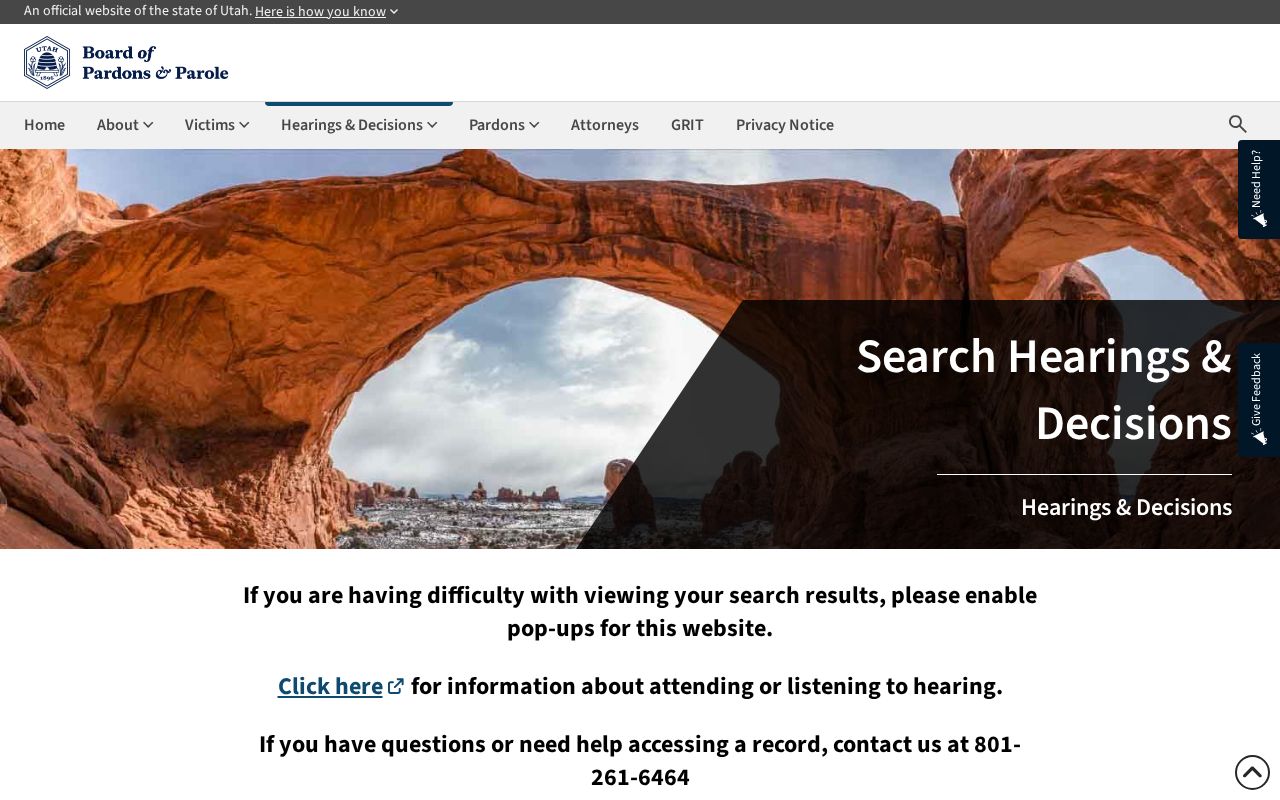
Search results should be read in date order. A scheduled review, pending item, or transfer event cannot be treated as proof that the person will enter the community.
Note: A detainer is a request or hold from another authority, so release from one custody system may lead to transfer rather than freedom.
Utah County Release Calculations
A person held before trial has no prison-style projected date because the criminal case, bail status, court orders, and custody decisions are still unresolved. A person serving a county sentence may have a local calculation, but UDC is not the universal source for it. Start with the jail or sheriff responsible for the booking, then compare the court docket and any release record. Utah counties differ in what they publish.
If UDC holds the person through a county placement arrangement, the statewide UDC and Board path can still apply. Ordinary county custody remains with the local custodian. Ask which agency calculated the sentence, whether another hold exists, and whether the stated date is an estimate or a completed event. The statewide County Directory routes to the local release source without implying that one Utah portal covers all jail sentences.
- Projected date
- A current estimate or ordered future event that may change.
- Parole
- Conditional release from prison while the sentence and supervision continue.
- Discharge
- The end of the sentence or supervision, which is distinct from leaving prison.
- Detainer
- A hold or request from another authority that can change the next custody destination.
Compare Utah Release Date Evidence
No single public field answers every release question. The UDC result is strongest for current state corrections status. A Board order is strongest for the decision that authorizes, denies, changes, or conditions parole. A movement record is stronger for whether the person physically left a facility. A termination or expiration record addresses the later end of the sentence. Comparing those records by purpose keeps a projected release from being mistaken for full discharge.
| Source | Best evidence | Important limit |
|---|---|---|
| UDC Offender Search | Current supervision, location, housing, and Release Date/Type | Stated scope is people currently under UDC supervision. |
| Board final order | Decision, effective date, conditions, and later Board action | A hearing listing or pending matter is not a release grant. |
| UDC movement record | Recorded movement out of or between corrections placements | A transfer may still leave the person in custody. |
| County release record | Local jail release or movement handled by that custodian | It does not establish a separate UDC or federal discharge. |
| Termination or expiration record | End of sentence or supervision when documented | It may occur well after physical release from prison. |
Dates should also be placed in sequence. The court sentence comes first. Board hearings and orders follow within the statutory framework. UDC then records status, housing, and movement. A later rescission, revocation, corrected credit, or new hold can change what happens next. When two sources show different dates, do not choose the one that appears more favorable. Identify which event each date describes and seek the newest source for that event.
Which date should be quoted? Use the exact label and source. Say that UDC displayed a Release Date/Type on the access date, or that a final Board order set an effective date subject to stated terms. That wording preserves what the government record proves without turning a changing record into a guarantee.
Confirm a Utah Release Date
When the public fields disagree, a focused UDC records request can close the gap. The UDC Media and Public Information page identifies public offender data and provides the GRAMA route. Ask for the releasable sentence calculation, legal-status history, movement or release record, parole or expiration date, or discharge documentation. Include the full name, known aliases, offender number, and an approximate custody period so staff can locate the record.
The UDC public-information screen is the official starting point for that focused records route.

Ask for segregable public parts if some content is classified or redacted. Utah GRAMA requires enough detail to identify the requested record. An ordinary response is due as soon as reasonably possible and no later than ten business days. The five-business-day path requires a showing that quick access benefits the public rather than mainly the requester. Extraordinary circumstances can extend the time, but the agency must identify the circumstance and give the date or estimate required by law.
A fully discharged person may no longer appear in the current-supervision search, so an absent result is not proof of the person's history or present freedom. Pair the agency response with the final Board order and, when relevant, the court or county custody record. That provides a dated, source-specific answer instead of a guessed release day.