
Utah Parole and Probation Compared
Parole begins when the Utah Board of Pardons and Parole releases a person from prison before the sentence has fully ended. The person leaves confinement but serves the balance under conditions and UDC Adult Probation and Parole supervision. Probation follows an order from a sentencing court. It can be imposed without a state-prison term or can follow a local custodial sanction. UDC Adult Probation and Parole, commonly called AP&P, provides statewide field supervision for both groups, yet the Board controls parole decisions while a court controls probation orders.
That split determines which record answers a status question. A parole grant, violation ruling, termination, or expiration is documented by the Board. A probation term and its termination are documented in the court case. UDC may show either person while supervision remains active. The live jail roster is not a supervision directory. A person can be released from prison, remain on parole, and have no current jail entry.
| Point | Parole | Probation |
|---|---|---|
| Starting authority | Utah Board of Pardons and Parole after imprisonment | Sentencing court through a court order |
| Field supervision | UDC Adult Probation and Parole | UDC Adult Probation and Parole |
| Best active-status lead | UDC offender result and current Board order | UDC offender result and current court docket |
| Best ending record | Board termination or expiration order | Court probation-termination order |
The UDC Adult Probation and Parole page shows the statewide division and its regional routing.
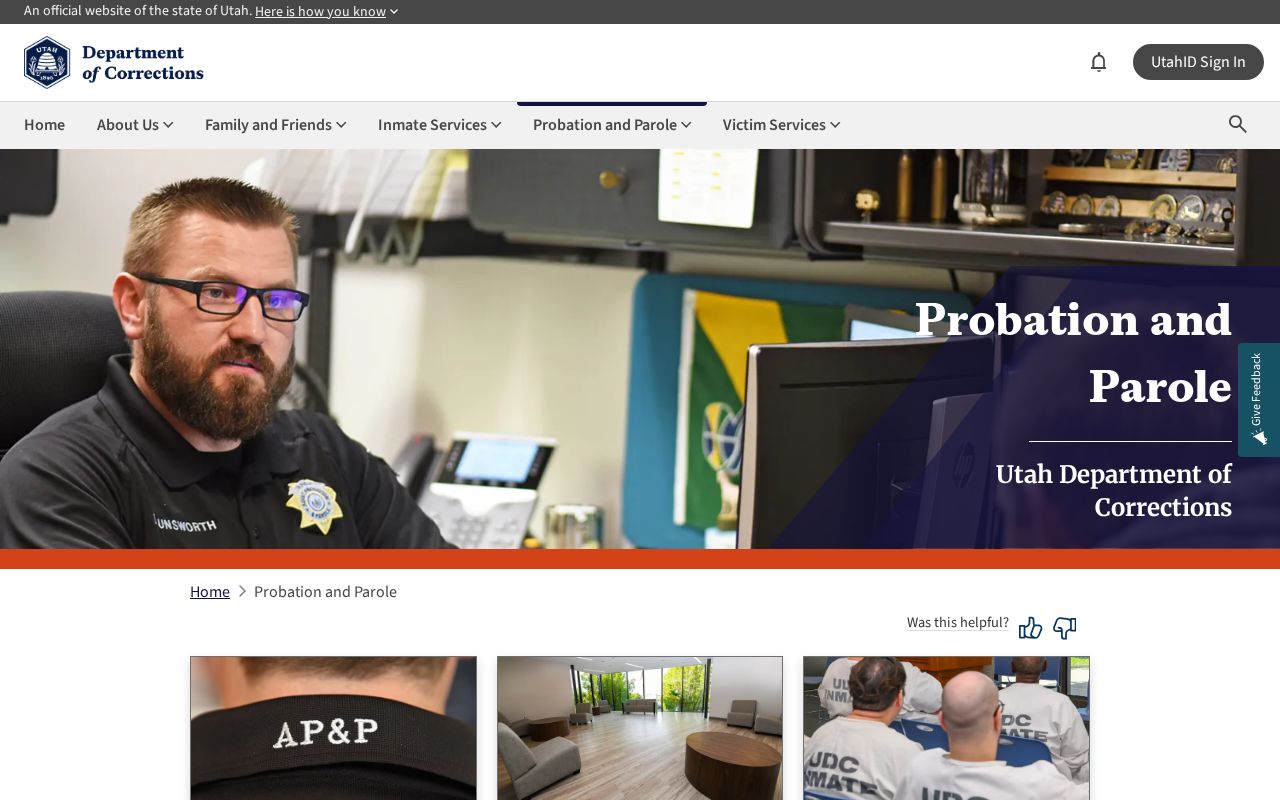
Its office structure helps route a specific status question without treating one county jail as the statewide source.
Verify Utah Post-Release Supervision
Start with the person’s full name and, if known, UDC offender number. UDC says its public offender search is limited to people currently incarcerated by the department or on probation or parole with it. That makes a matching record useful evidence of active UDC custody or supervision. It also makes a missing result inconclusive. A person may have completed supervision, may be recorded under a different name, or may be supervised under a court record that requires a separate check.
- Search the UDC offender system by the person’s name or offender number. Match date of birth before relying on a result.
- Read location, facility placement, Release Date/Type, case manager, and case-manager email together. A community supervision entry is not the same as prison custody.
- For parole, search the Board’s orders and decisions. Find the latest action, not merely the first parole grant.
- For probation, check the sentencing case through Utah Courts Xchange. Look for the original order and any later termination or violation order.
- If the public record conflicts or has disappeared, contact the appropriate AP&P region or request a releasable legal-status history from UDC.
The official UDC offender search displays the current search scope before a query begins.
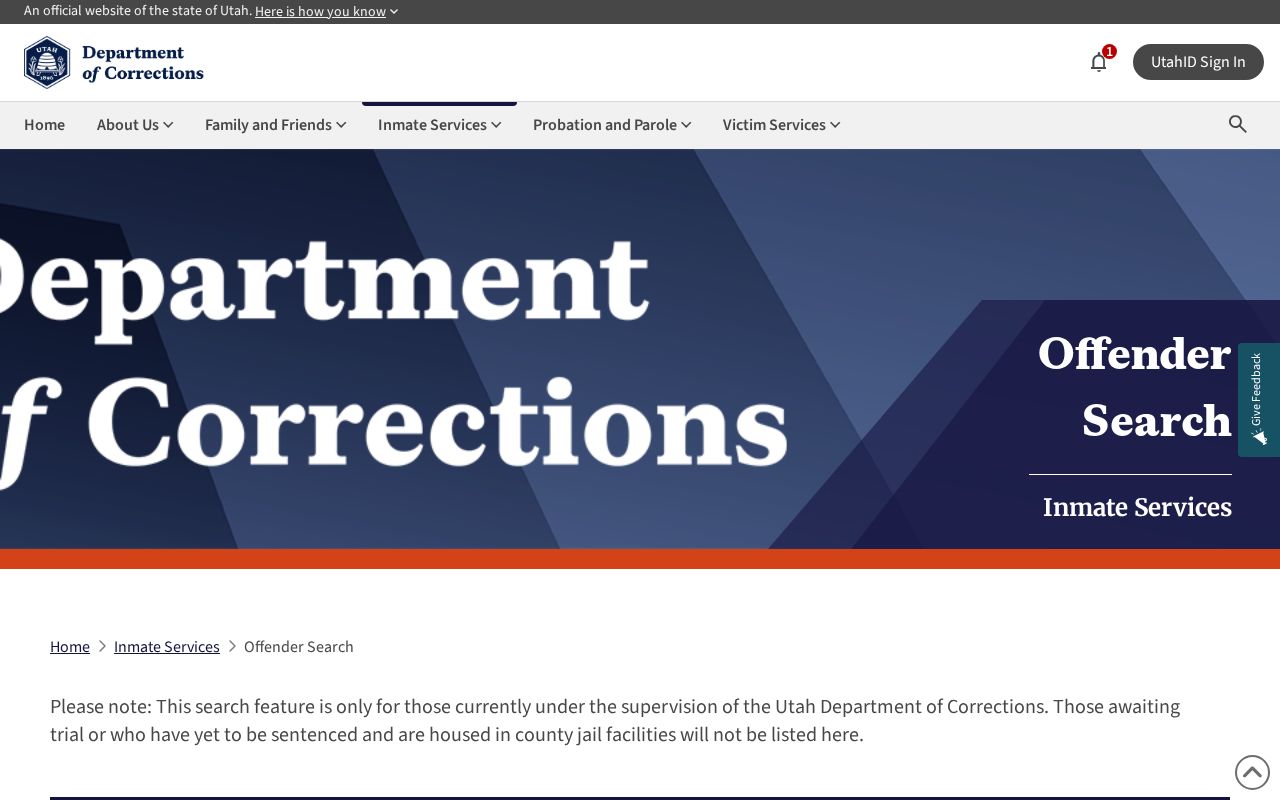
The warning matters because full discharge can remove a person from the tool’s stated population.
For a broader release trail, the Utah released-inmates search path distinguishes county, state, federal, and court records.
Utah Supervision Agencies and Records
UDC AP&P is the field-supervision division. Its agents supervise conditions, respond to alleged violations, and work through regional offices across Utah. The Board, by contrast, decides parole grants, violations, rescission matters, and termination or expiration actions within its authority. Courts retain the order history for probation. These systems can describe one person at different stages, so the most recent dated action controls over an old search result or an assumption based on time passed.
The public UDC result can list a case manager and email. Use those details for a specific status or routing question. The research does not support bulk collection or a statewide public list of all people supervised by one office. If the named agent has changed, the regional AP&P directory is the sound fallback because supervision assignments can move.
Statewide supervision source
Utah Department of Corrections
Adult Probation and Parole
Regional offices serve Utah statewide.
Find AP&P offices and official guidance
- Parole
- Conditional release from prison while the sentence continues under Board authority and AP&P supervision.
- Probation
- Court-ordered supervision that is separate from a Board parole grant.
- Discharge
- The legal end of supervision or sentence shown by the controlling order or status record.
- Absconder
- A supervised person alleged to have evaded supervision; roster absence alone does not establish it.
Note: The latest dated Board or court action is stronger evidence than an undated reference copied from an older record.
Utah Parole Conditions and Violations
Conditions set the rules of community supervision. Their exact terms come from the person’s current order and supervision documents. A suspected breach does not automatically prove revocation. AP&P can investigate, request a warrant, and coordinate with UDC investigators or local, state, and federal partners. For a parole allegation, AP&P may request a Board warrant. If the person returns to prison, the Board uses the applicable parole-violation process.
An AP&P hold can also place a person in a county jail. That event changes the custody source. The county roster may show present detention, while the UDC and Board records explain the supervision basis. Conversely, disappearance from a roster may reflect release, transfer, or a data update. It does not show that the violation ended.
The Board’s hearing and review types identify parole-violation proceedings separately from original parole hearings.
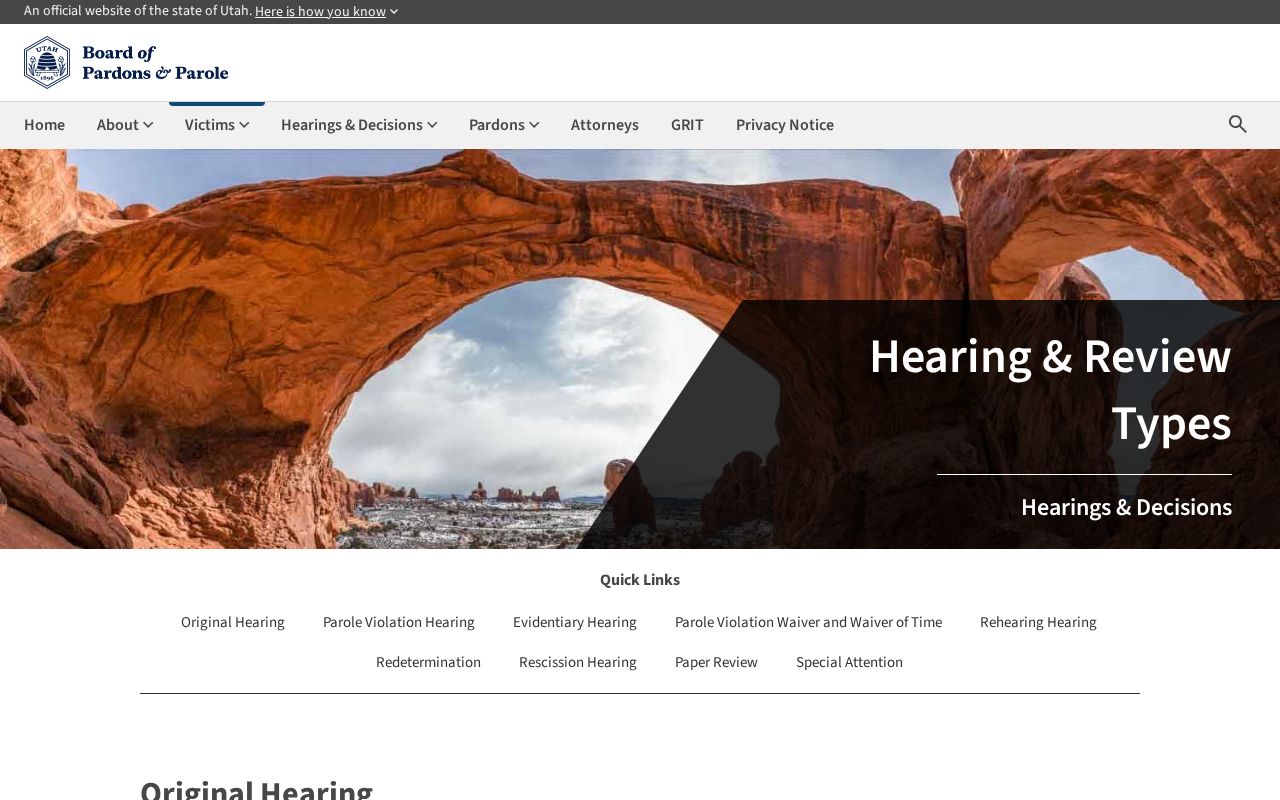
This distinction keeps a violation hearing from being mistaken for a new release grant or a public warrant search.
Utah Absconder and Warrant Checks
No authoritative statewide, public, name-searchable AP&P absconder list was verified in the Utah research. That absence shapes the correct check. Do not label the Board hearing search as a warrant database, and do not infer absconding from a stale address or a missing UDC result. A status question should go to UDC or the appropriate AP&P office. An actual warrant should be checked only through an official court or law-enforcement channel.
Utah Courts Xchange can supply public case information and documents within its coverage. It is most useful for a probation case, an arrest-related court action, or a later order that explains legal authority. It is not a live custody feed. The county jail or UDC record answers whether the person is currently confined, while the court record explains why a warrant, hold, or probation action exists.
The Utah Courts Xchange information page describes the court-record channel and its scope.
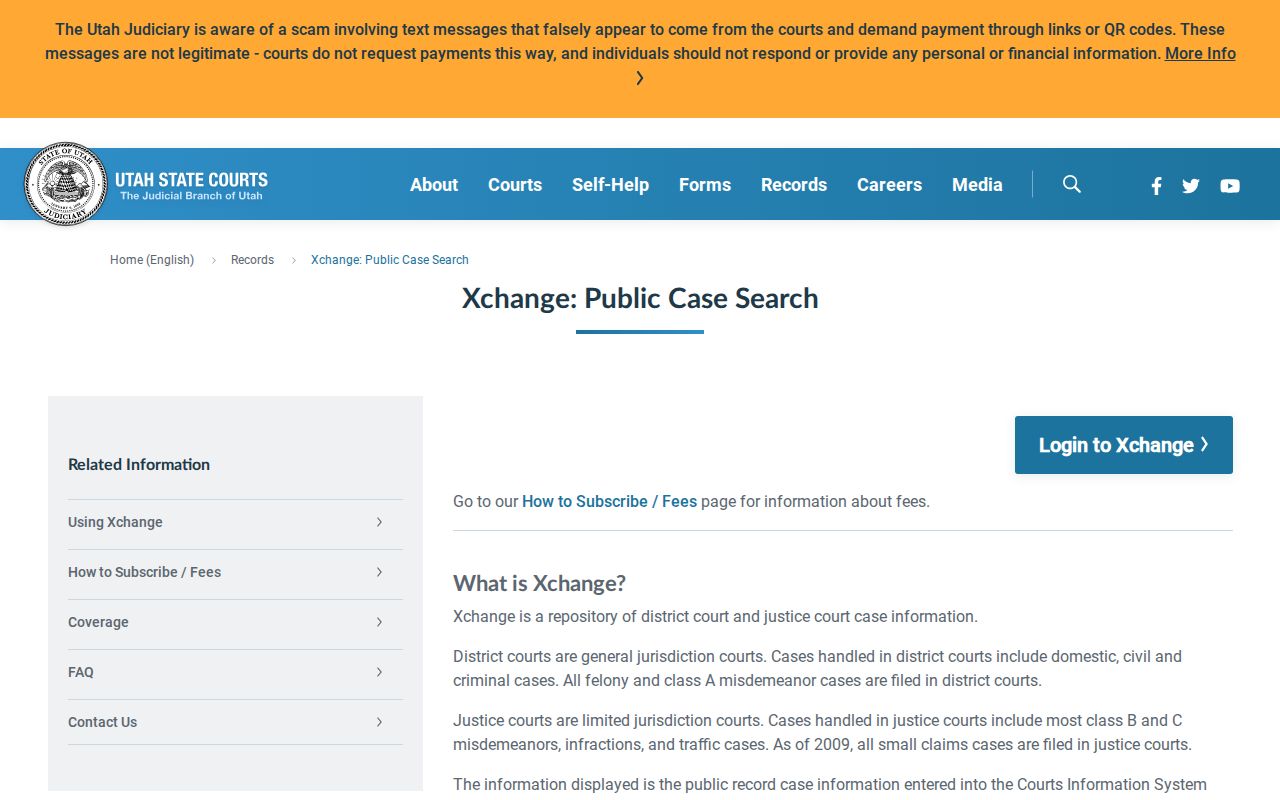
A court docket can support probation verification, but it should not be read as proof of a physical release from custody.
Utah Release Transition and AP&P
Utah’s release process can connect a person leaving prison with an assigned AP&P agent and on-site transition providers. The statewide transition framework in Utah Code §64-13-10.6 addresses planning at the end of incarceration, including identification-related steps and required connections. It supports a structured handoff. It does not guarantee that each person receives the same service, document, or outcome on release day.
This handoff also explains why release and discharge must remain separate. A person can leave a prison building, meet an assigned agent, and begin parole on the same day. UDC may still list that person because supervision continues. Movement to a community correctional center is likewise a corrections-controlled placement, not proof that the sentence has ended.
Utah law also provides for coordinated notice of specified releases and movements after a qualifying signed request. Covered events can include release from a halfway house or outside program, transfer out of state, escape, and termination from probation or parole. That private statutory notice route is separate from the public offender search and VINELink registration. The event named in the notice still controls its meaning: a transfer, a prison release to parole, and termination of supervision are three different changes.
For navigation, use the assigned case-manager information when it appears, then the AP&P regional office directory. Questions about the legal start or end of parole belong with the Board order. Questions about a probation term belong with the sentencing court’s order.
Utah Parole Conditions Changed
UDC and the Utah Board of Pardons and Parole announced revised parole conditions for people released on or after December 10, 2025. The agencies called it the first comprehensive revision in a decade. They described clearer language, less repetition, and closer alignment with statutory changes while retaining supervision tools. Because the effective date is specific, an older set of conditions should not be assumed to govern a later release.
The joint UDC and Board policy announcement gives the date and scope of the revision. For one person, the current order and issued conditions remain the controlling sources. A general policy announcement cannot establish whether that person complied, whether a warrant was issued, or whether supervision ended.
The change affects both verification and record reading. Record the release date, identify which conditions were issued, and check for later Board actions. That sequence avoids applying a current summary to a person whose parole began under an earlier version.
Note: A dated statewide policy describes the rules in force, while an individual order records the action taken in one case.
When Utah Supervision Ends
Leaving prison does not end a Utah sentence when parole begins. For relevant post-2018 indeterminate paroles, Utah Code §76-3-202 generally extends parole through the maximum sentence unless the Board terminates it earlier under applicable law and guidelines. Exceptions and offense-specific rules can change the result. Time alone is therefore a poor substitute for the latest Board order.
A final Board termination or expiration order is the strongest public parole record. UDC status and date can support it. No standard public document titled a parole discharge certificate was verified, so it should not be promised. If a certified or nonpublic record is needed, use the Board’s records route and follow authorization rules for material that is private, controlled, or protected.
Probation ends through the sentencing court’s action. Search the court case for a termination order and compare it with UDC status. A person who no longer appears in the offender search may be fully discharged, but the missing result alone does not prove the date or basis. The order supplies that proof.
A clean verification file should preserve the identity match, the last active-supervision result, and the ending order as separate records. For parole, record the offender number, Board decision date, effective date, and whether the order says termination or expiration. For probation, preserve the court case number, sentencing court, and termination entry. Those fields reduce the risk of joining records for two people with similar names.
When the public record is incomplete, use the Board contact and records route for parole material or the court record channel for probation. UDC can address a releasable legal-status history when its public status does not explain the change. Protected or controlled information may require authorization and may not be released to every requester. The official response, not an assumed certificate name, defines what can be supplied.